
Printing
What's it About?
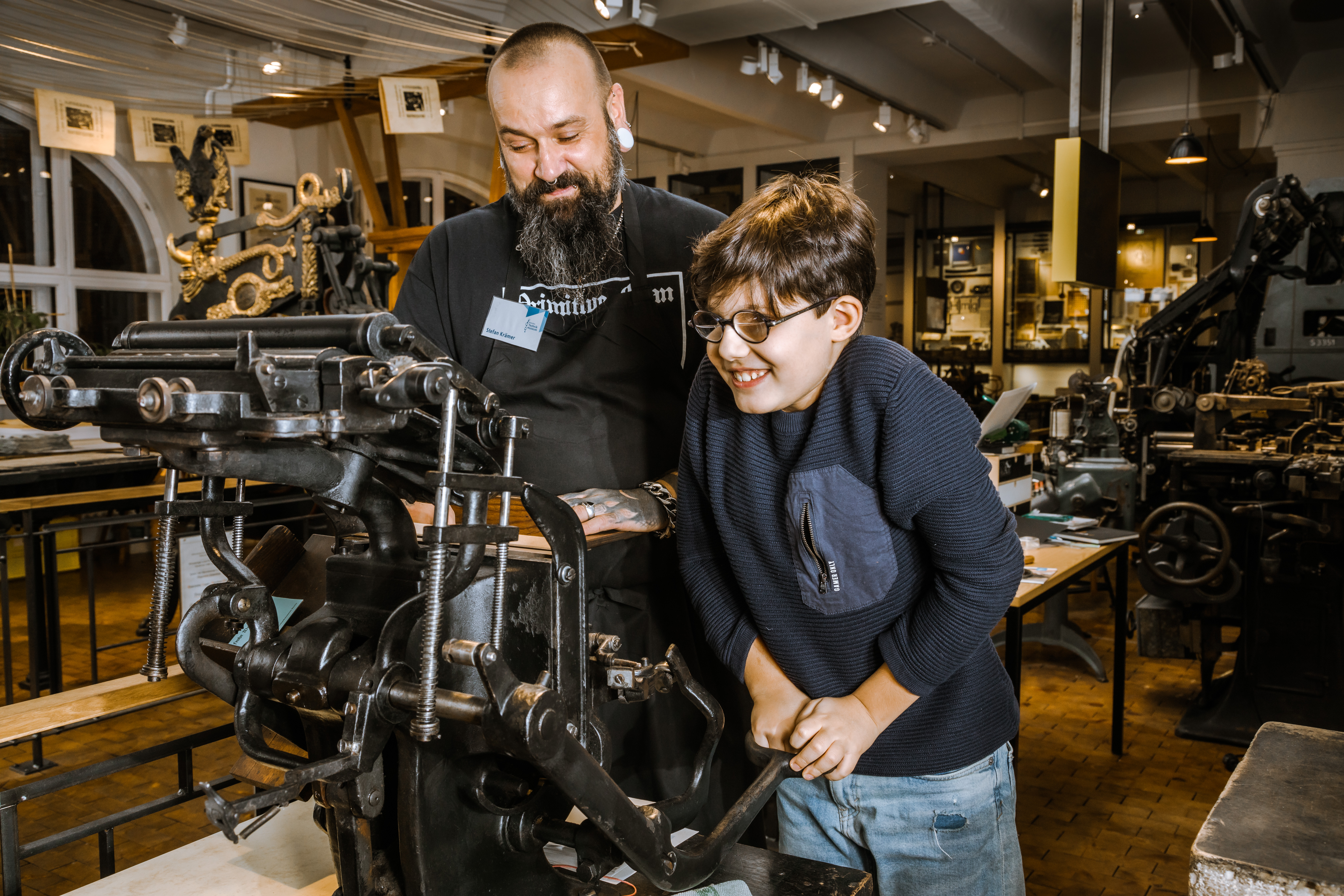
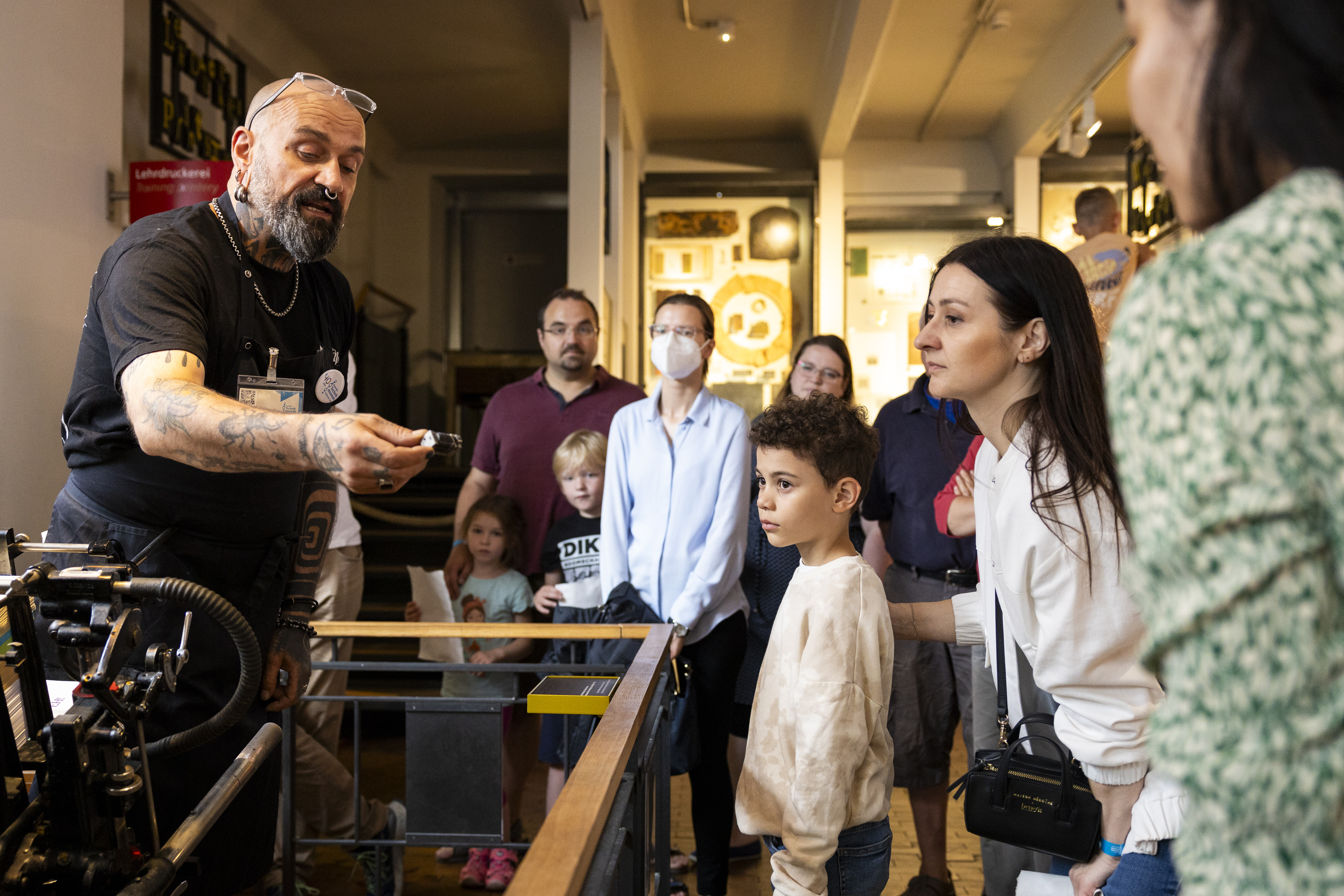
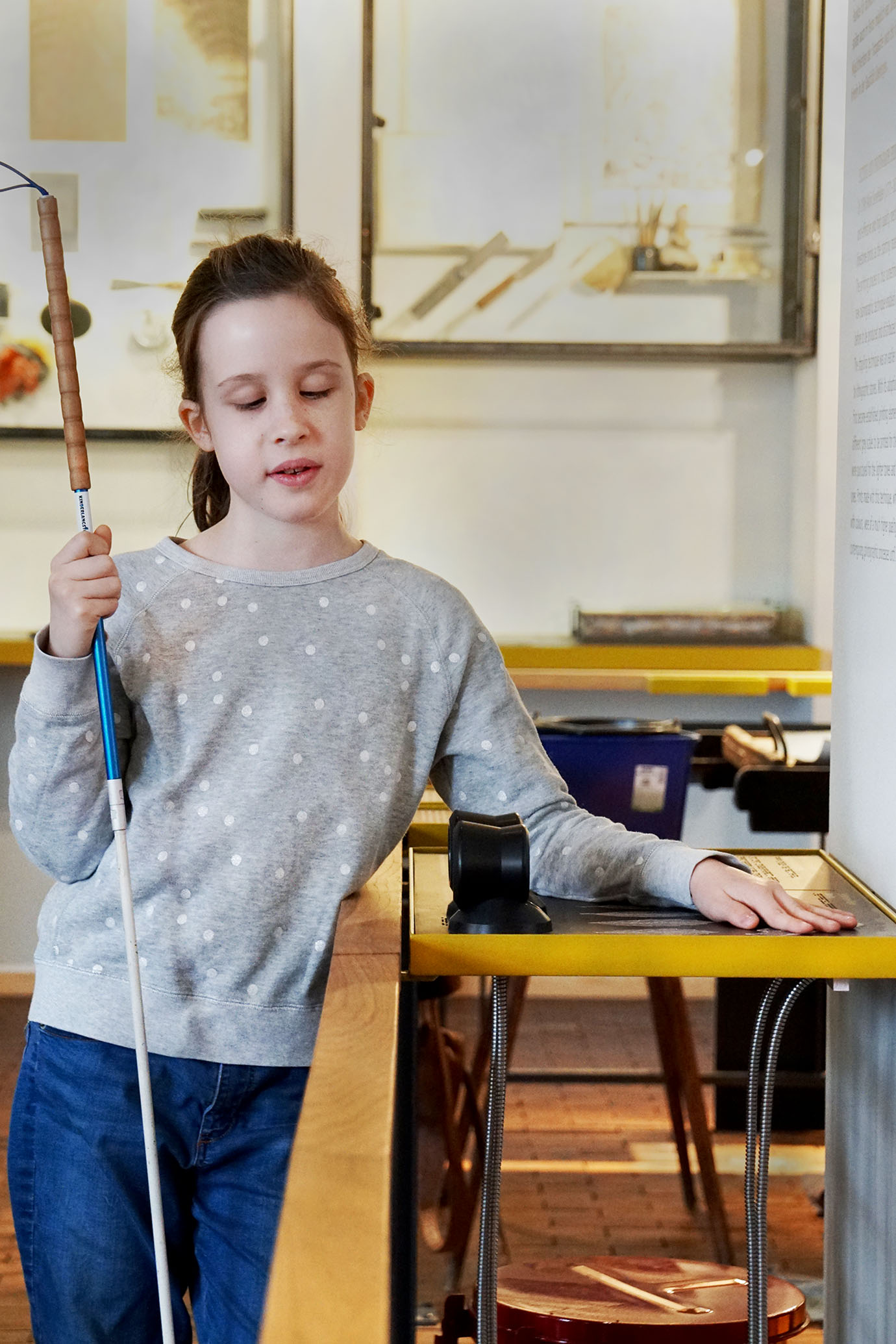
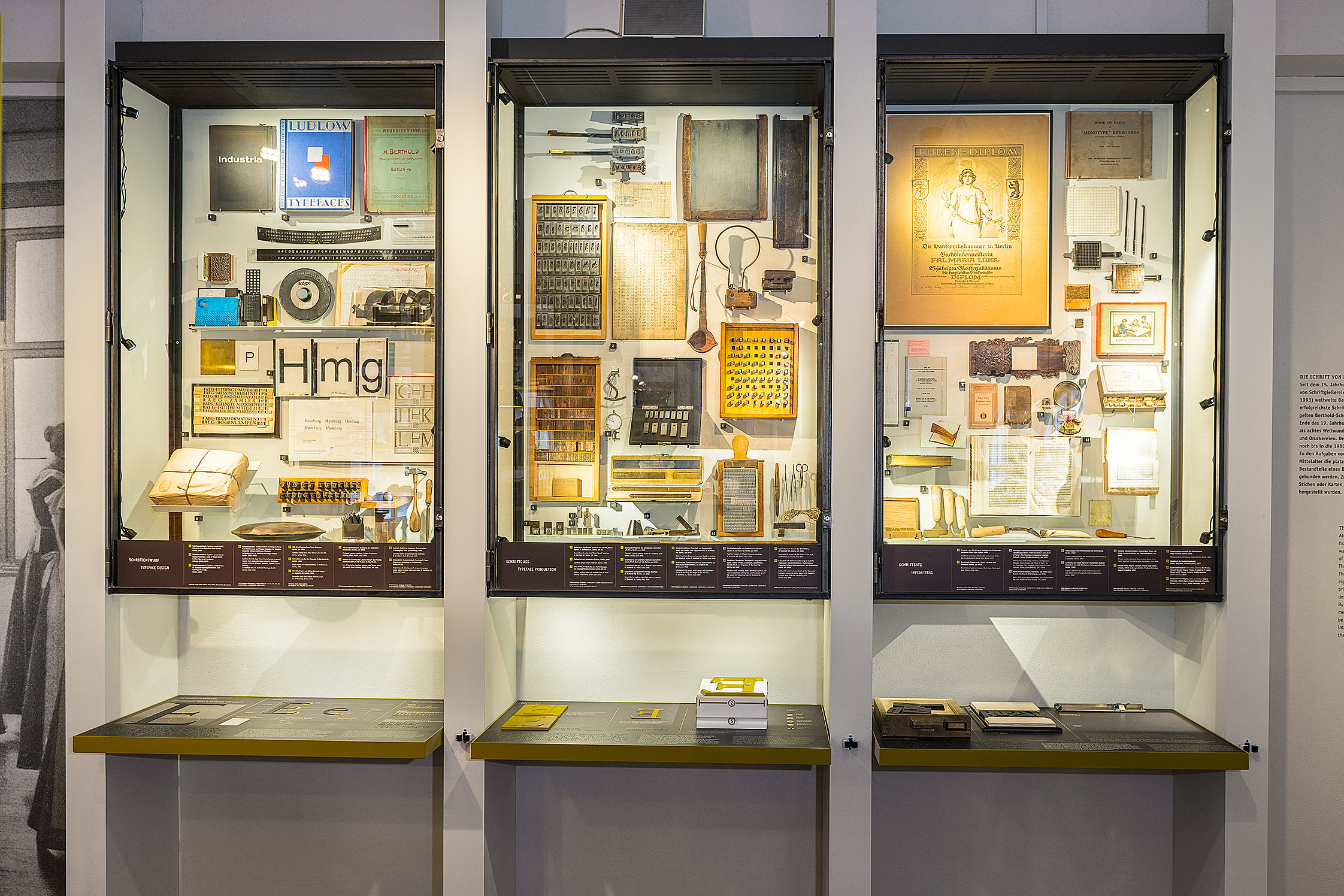
Spanning 200 square meters, the permanent exhibition focuses on five major themes: writing, typesetting, printing, and the printing of images and sheet music. It features hands-on exhibits and tactile graphics with Braille labels in German. Visitors can listen to approximately three-minute-long texts on the main topics using headphones provided on-site or on their own smartphones via a QR code.
The World of Printing
Among printing techniques, the relief printing process developed by Johannes Gutenberg around 1454 — often referred to as letterpress printing — is the best known. Along with intaglio, planographic, and transfer printing, as well as other techniques, it has been part of the Intangible Cultural Heritage since 2018. However, type casting is also an important part of the history of printing.
With industrialization and the founding of the German Empire (1871), Berlin became a major center for the printing industry. Around 1910, there were as many as 150 daily newspapers. In the so-called “Newspaper District” — the southern part of Friedrichsstadt, now known as Kreuzberg — there were over 500 publishing houses, companies, and printing shops in the graphic arts industry. In the 20th century, this sector encompassed over 40 specialized professions.
Male Die, Female Die, Printed Letter
Before the introduction of movable-type printing, books were copied by hand. Consequently, they were rare and valuable. The printing process — in which letters and characters could be rearranged repeatedly — required large quantities of type, known as “letters.” Type casting made it possible to produce individual metal type characters both quickly and in large quantities.
The process of making a single letter consisted of three steps, which are on display in the exhibition:
1. The type design in the form of a hand-cut or engraved matrix — a die for each letter or character.
2. The production of the counter-type for each individual character, the matrix.
3. Type casting using hand-operated casting tools or, later, type-casting machines.
Several original exhibits, for example from the extensive collections of H. Berthold AG, are on display in this section.
From the Square to the Linotype
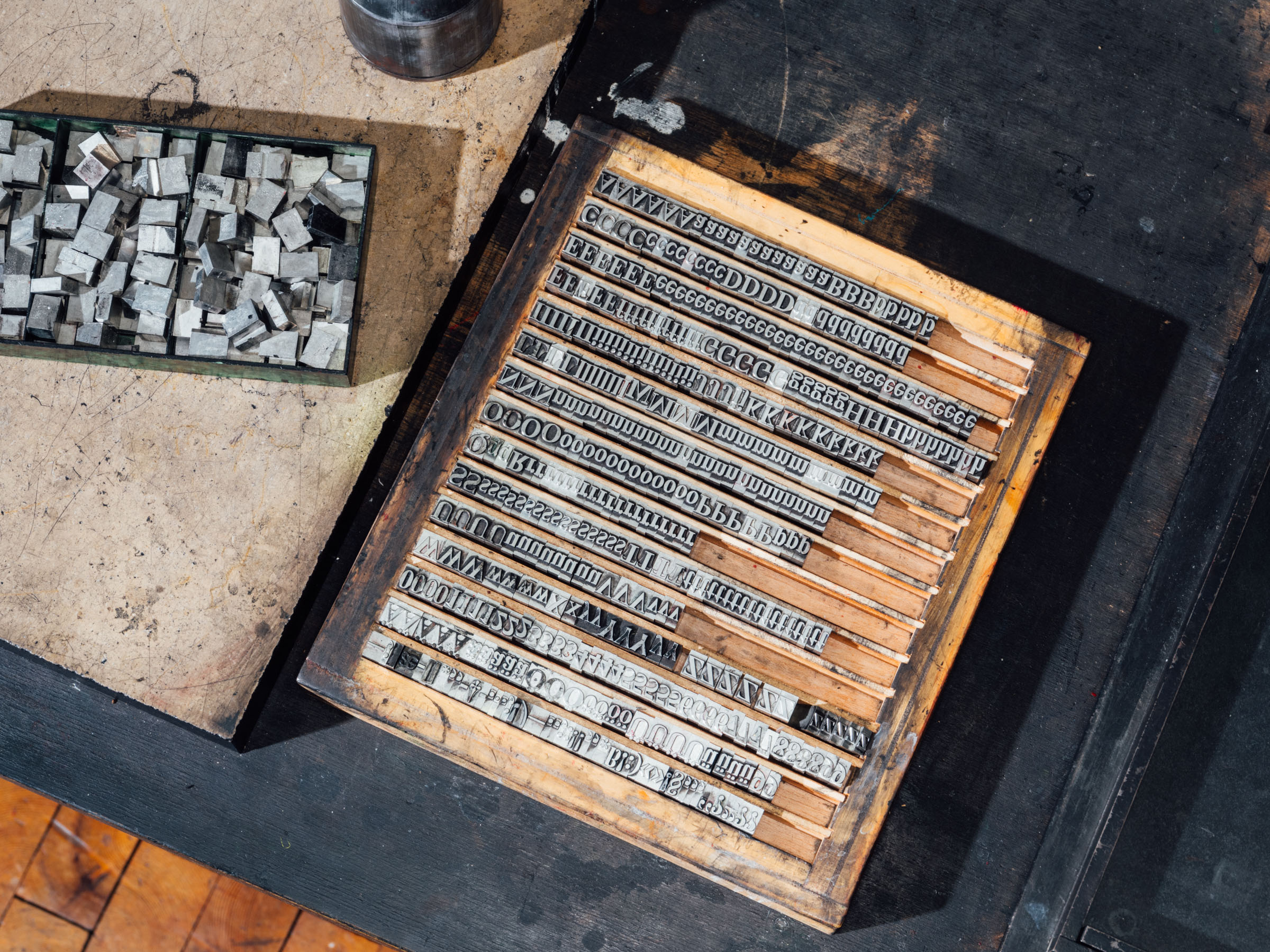
In manual typesetting, metal letters — arranged in type cases according to their frequency — are assembled into individual words using a set square. Gradually, these form the eventual printing form in a typesetting tray, assembled into a coherent text or column.
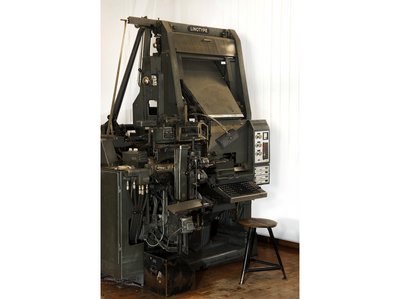
Faster processes were needed, especially in newspaper printing, by the end of the 19th century. Typesetting machines and line-casting and typesetting machines — which could now be operated using a keyboard — replaced manual typesetting in these fields. A fully functional Linotype typesetting machine — named “Linotype” after “a line of type,” meaning “a row of letters” — from 1972, on loan from the Bundesdruckerei, vividly illustrates this impressive technology.
Arts and Crafts: From the Art of Printing to the Printing Industry
The centuries-old craft-based printing trade evolved into the printing industry in the 19th century. Large-format offset and rotary printing presses and machines can no longer be displayed in the exhibition, even though they are part of the collection.
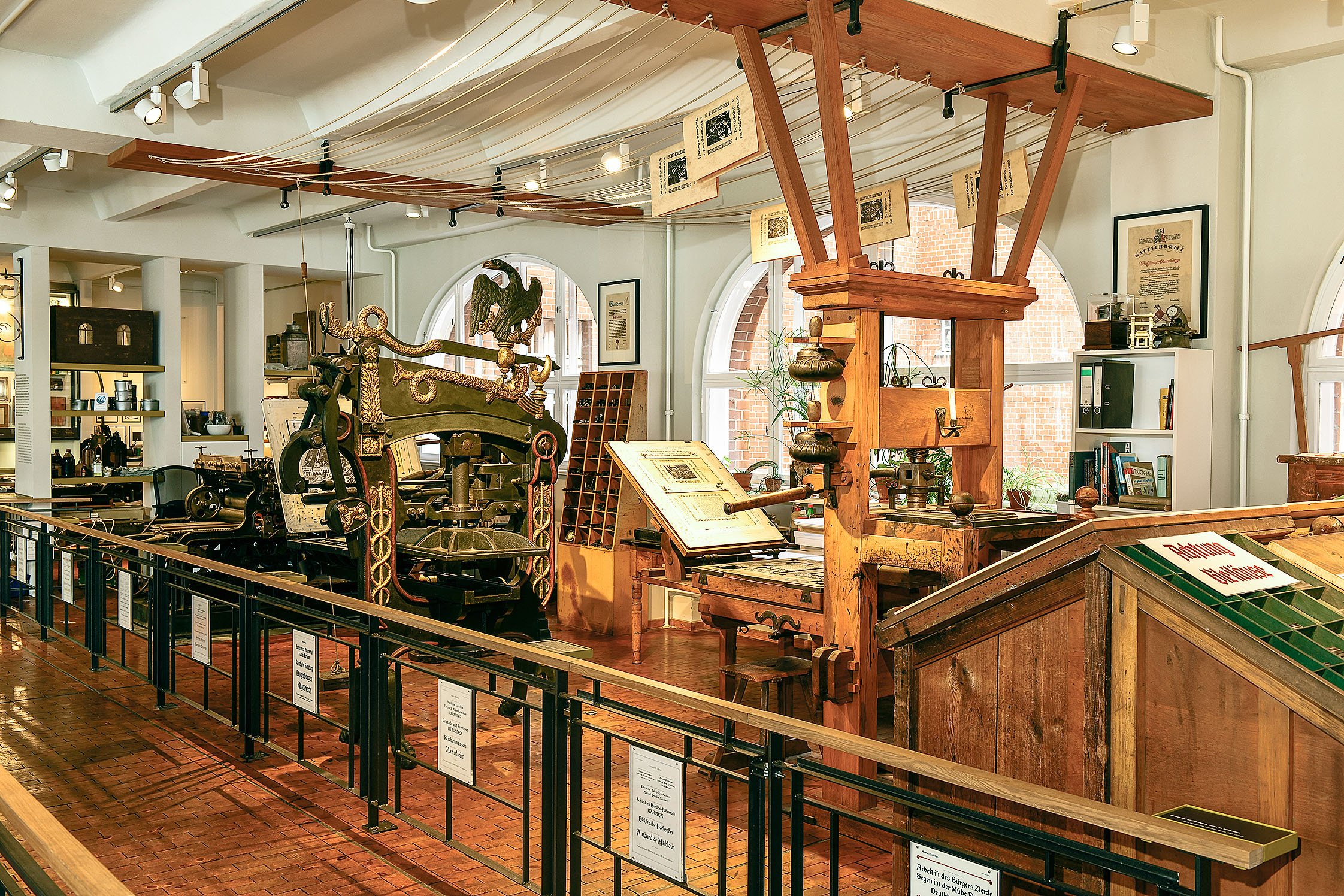
The exhibition traces the technical evolution from a 17th-century wooden hand press — reproduced here — to a steam-powered high-speed press. Among the items on display are an iron Standhope press from Decker’s Royal Prussian Court Printing Office in Berlin (1835), a high-speed press from Maschinenanstalt Hamm (1895), and a Heidelberg platen press (1963) with a pneumatic sheet-guiding system dating from 1913.
Images Before Photography
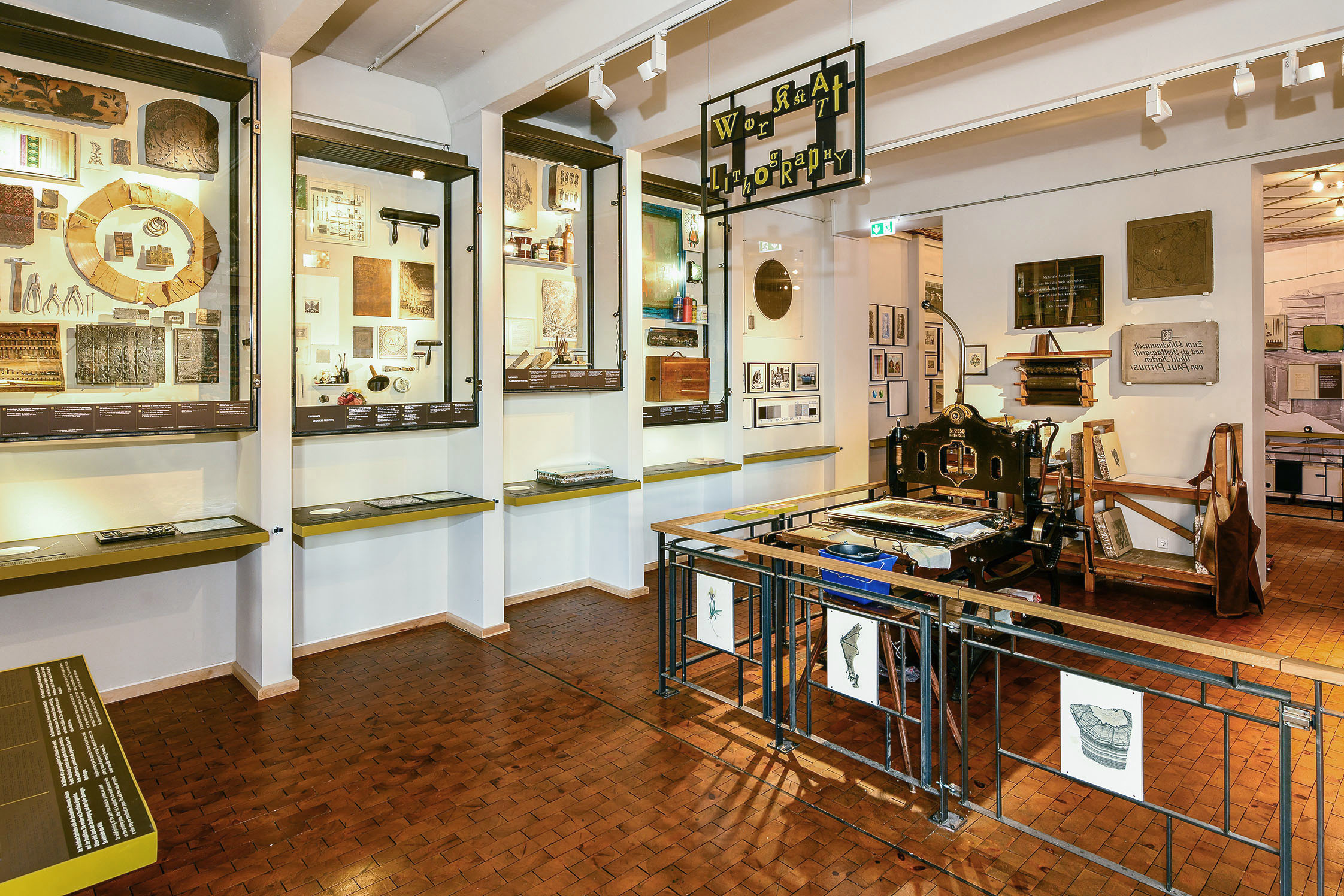
Unlike today, printing images was a very labor-intensive process well into the 19th century. Four display cases feature printing plates, prints, and tools used in various image-printing techniques. These include lithography, a flat-printing technique that emerged in the late 18th century. Lithography made it possible for the first time to produce images in large print runs, even in larger formats.
Between 1804 and 1930, Berlin was a major center for lithography. The lithography workshop of Berlin-based master stone and offset printer Dietmar Liebsch, which was acquired in 2017, brings this technique to life. Among other works, prints were created in his workshop using the original plates by the Prussian painter, draftsman, and lithographer Adolph von Menzel.
Typewriters: Type on
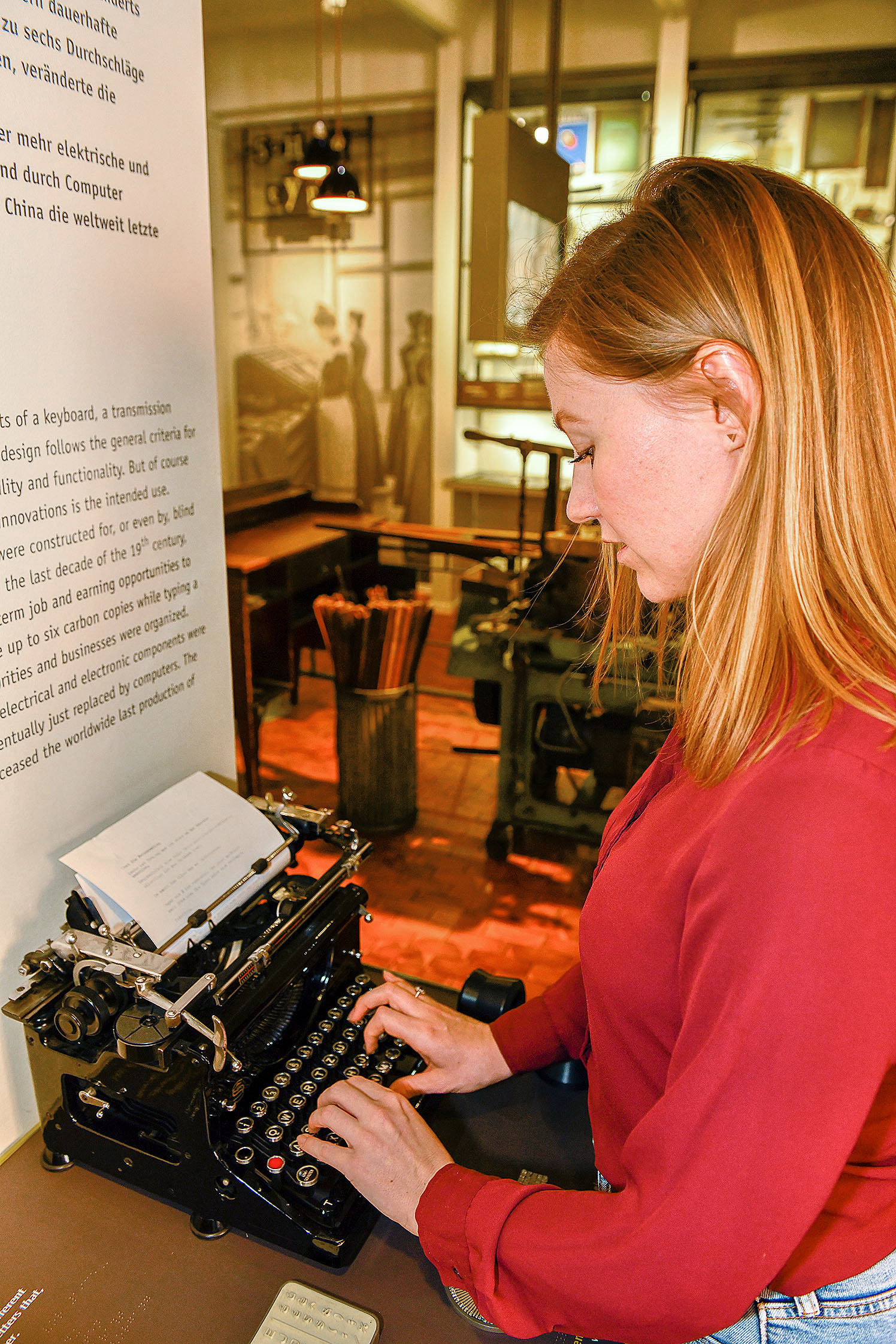
The various stages of development and different designs of the typewriter are on display through 30 examples dating back to 1872. Even though the typewriter has been almost entirely replaced by computers, many of its functions, terms, and symbols have been preserved on computer keyboards to this day.
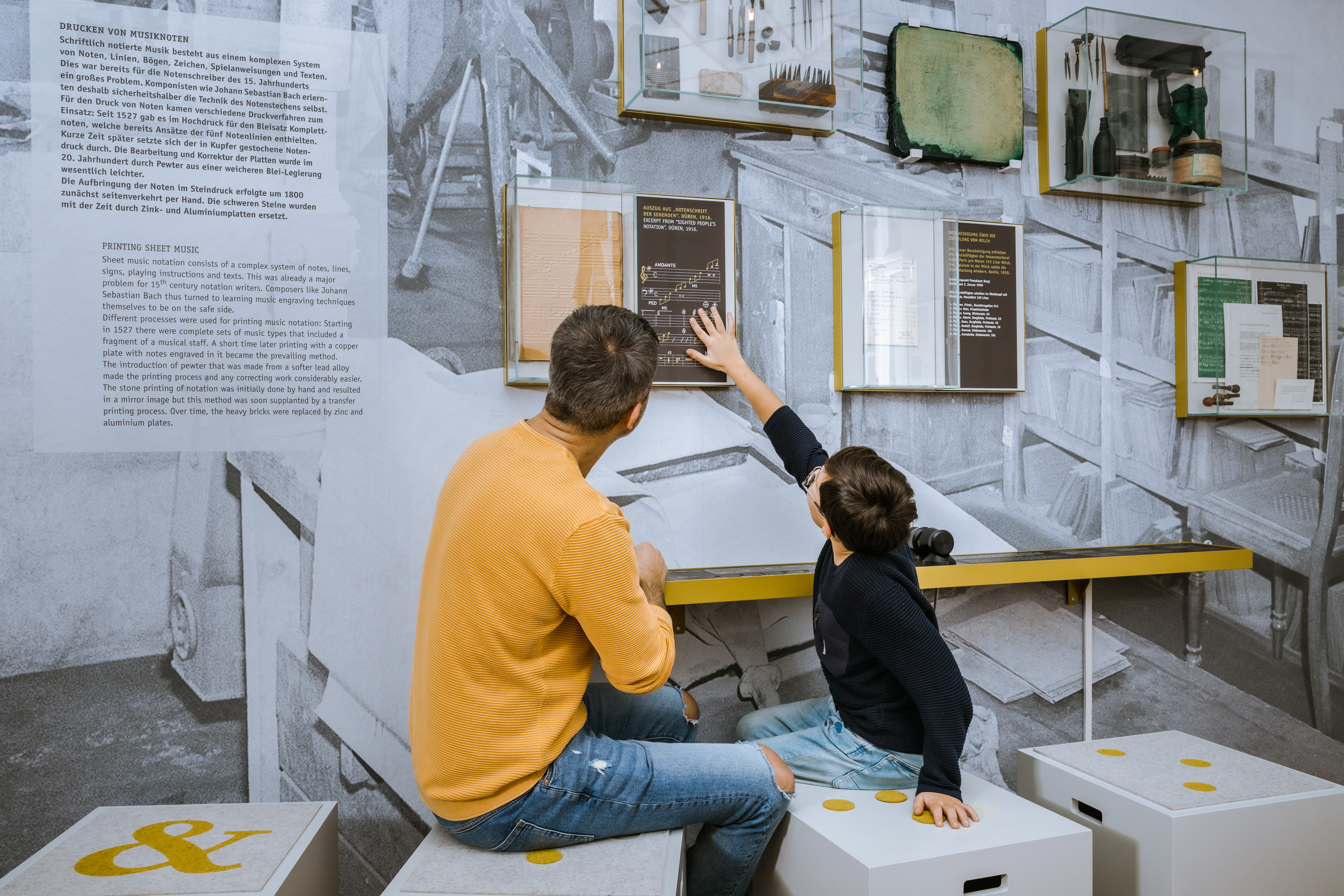
Printed Music
Written music consists of a system of notes, lines, slurs, symbols, performance instructions, and text. One of Berlin’s oldest music engraving shops, founded by Conrad Paris as the “Anastatische Druckerei,” was located in Berlin’s Prenzlauer Berg neighborhood until 1991. Incidentally, Berlin’s only female music engraver, Annelotte Paris, also worked at this business, which was run by four generations of the family. The process of printing sheet music is illustrated using a few examples from the workshop adopted from there.
Electric Writing Ball
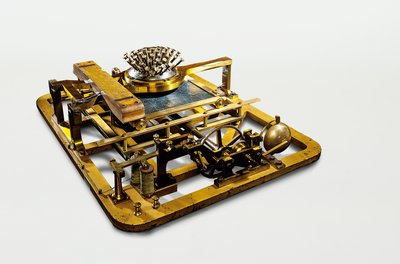
In 1865, the Danish pastor Hans Rasmus Johann Malling-Hansen invented the world’s first mass-produced typewriter, which featured what was known as a “typing ball.” Characters were printed onto the paper clamped beneath the machine using concentric rows of key rods. There were various models, and the paper was secured beneath the bars in different ways. One of the co-developers and producers was Prof. E. Jüngers of Stockholm, with his "Mekaniske Etablissement," named after him. Surprisingly, the specimen at the Deutsches Technikmuseum bears the number 1, even though it is not the first Malling-Hansen to be produced.
1872, 1/1986/1461
SDTB/ Photo: C. Kirchner
Wooden Printing Block from a Bible for the Poor
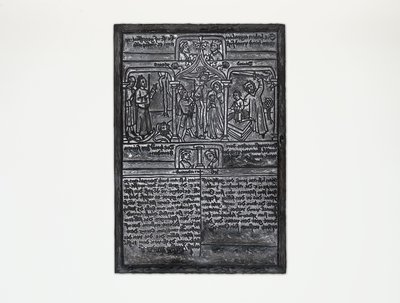
Until the late Middle Ages, books could only be reproduced by hand copying. To replace this laborious work, woodblock prints on paper were first produced in China. In Europe, the earliest woodblock prints date from around 1430. Text and images were carved together onto a single wooden block. This mirror-reversed image was then printed using the relief printing process.
1958, reproduction (original: 1430), on loan from the Deutsches Historisches Museum
SDTB/ Photo: C. Kirchner
Linotype Typesetting Machine
The “Linotype” typesetting machine was the first fully functional machine for setting and casting lines of type. It sped up typesetting work many times over. With the Linotype, typesetters could set about 6,000 characters per hour. The operator used a keyboard, and the matrix for the selected character dropped down into an elevator that was wide enough to hold one line. The printing form for a newspaper page was thus built up step by step.
Mergenthaler Setzmaschinenfabrik GmbH, 1904
SDTB/ Photo: C. Kirchner
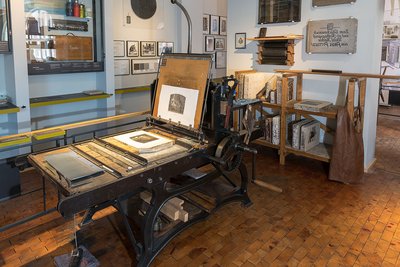
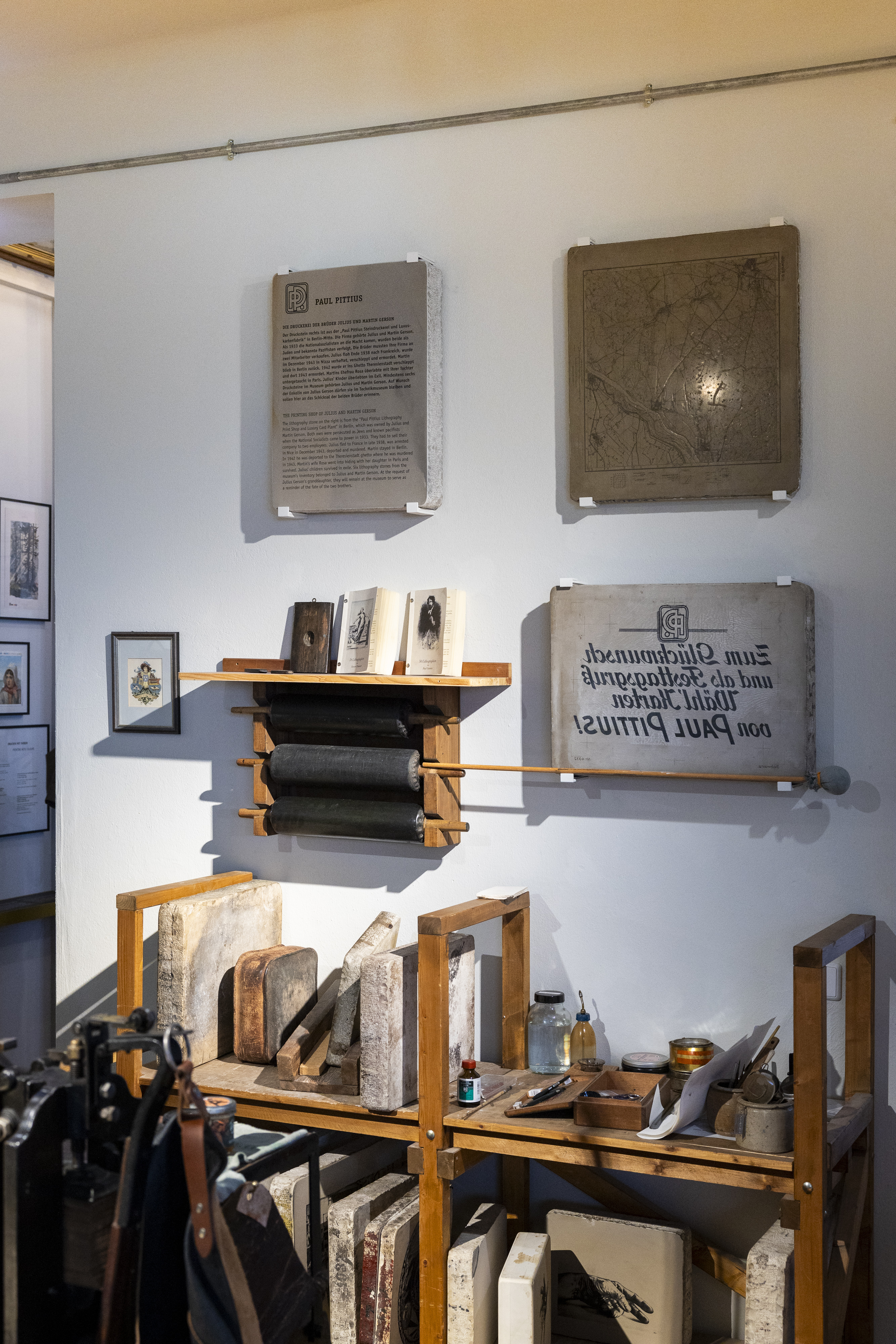
Historic Stone-Printing Workshop
The lithography workshop taken over by Dietmar Liebsch was supplemented with items from the museum’s existing collection. Some of these items came from the once-prominent Pittius printing shop near the Jannowitz Bridge in Berlin. The shop was slated to close, and the building was to be demolished. Helga Liebsch worked at Pittius and learned that the machines, supplies, and stones were also to be discarded. Dietmar Liebsch then purchased some of the equipment from the bankruptcy trustee for 50 Ostmark and put it all into storage. Thus began the history of his workshop, and thus ended the history of the Paul Pittius lithography shop.