Your privacy is important to us!

We use cookies to improve our website for you. No hidden trackers. You decide what you allow.

Essential cookies enable basic functions and are necessary for the website to function properly.
Statistics cookies collect information anonymously. This information helps us to understand how our visitors use our website.
Marketing cookies are used by third parties or publishers to display personalized advertisements. They do this by tracking visitors across websites.
Jump to main content

(copy 1)

Neue Ausstellung: „SuperCity 3000. Unsere Stadt der Zukunft“

Ab dem 27. März zeigt das Deutsche Technikmuseum die Sonderausstellung „SuperCity 3000. Unsere Stadt der Zukunft“. Entwickelt wurde sie mithilfe von 60 Grundschulkindern.

Pressematerial

Bitte beachten Sie die Hinweise zur Verwendung unserer Pressebilder. Zum Download Klick auf das Bild, dann auf den Download-Button.

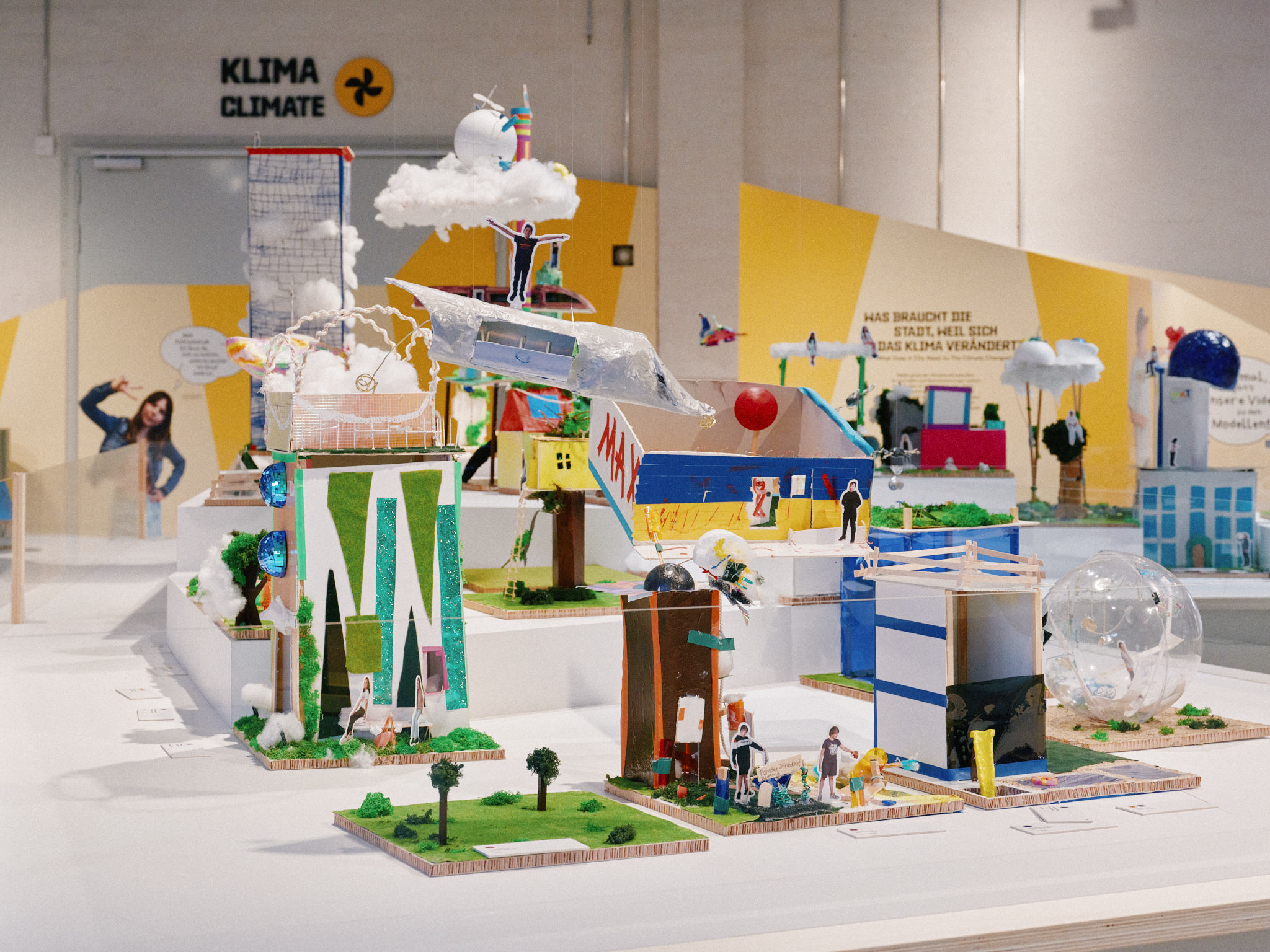
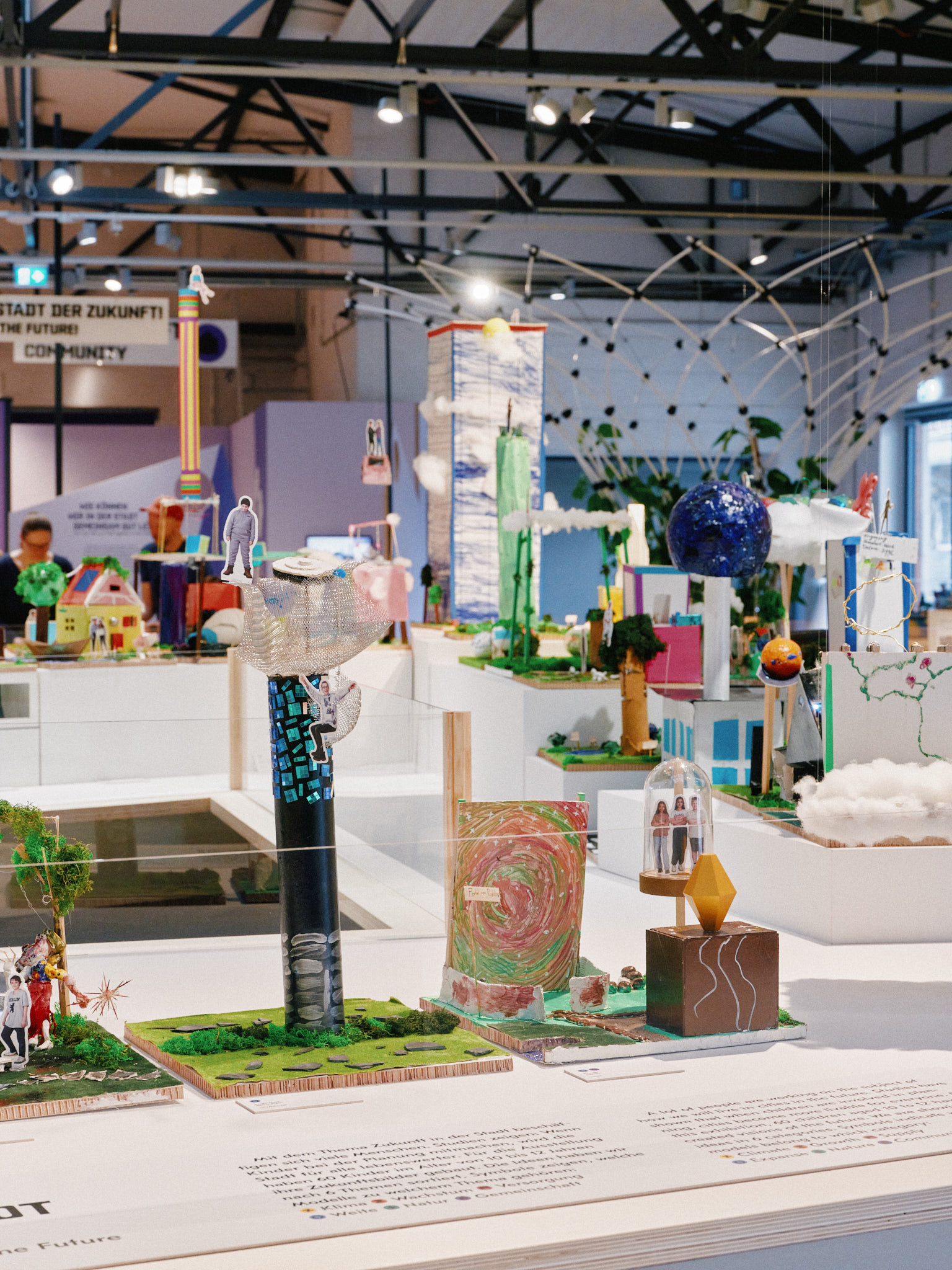
Colorful models of a “city of the future” form the centerpiece of the exhibition in the museum’s Ladestraße.

The models created by elementary school students depicting their “City of the Future” form the centerpiece of the exhibition in the museum’s Ladestraße gallery.

SDTB/ Photo: Ériver Hijano

Surrounding the children’s imaginative models of their city of the future are themed areas such as “Climate” and “Growth.”

And surrounding the children’s imaginative models of their city of the future are thematic sections such as “Climate” and “Growth,” which serve as a bridge to real-world innovative projects.

SDTB/ Photo: Ériver Hijano

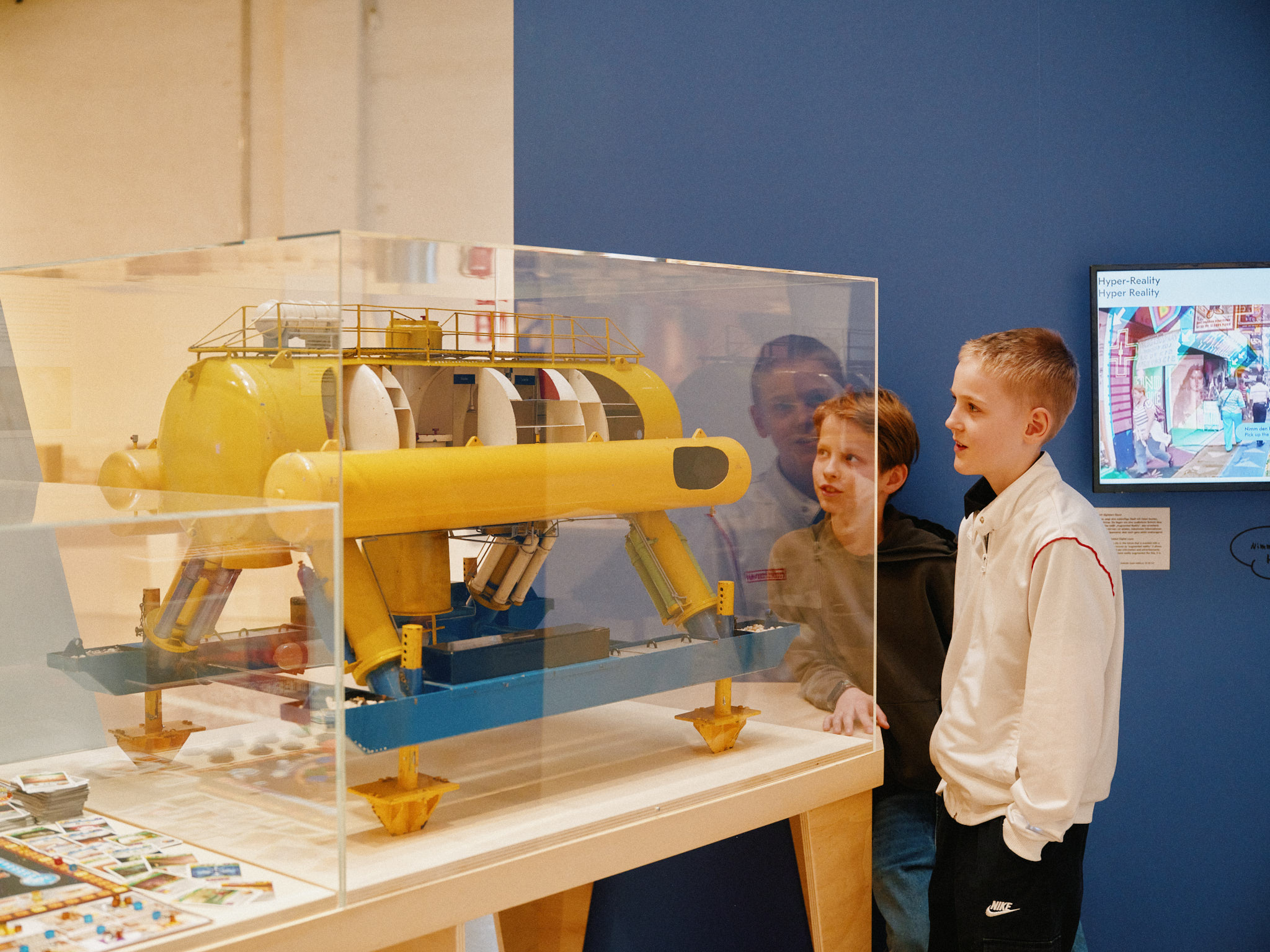
Two boys are standing in front of a yellow model of an underwater research station.

The historical model of an underwater research station off the coast of Heligoland makes it clear that research into underwater living has been underway for decades.

SDTB/ Photo: Ériver Hijano

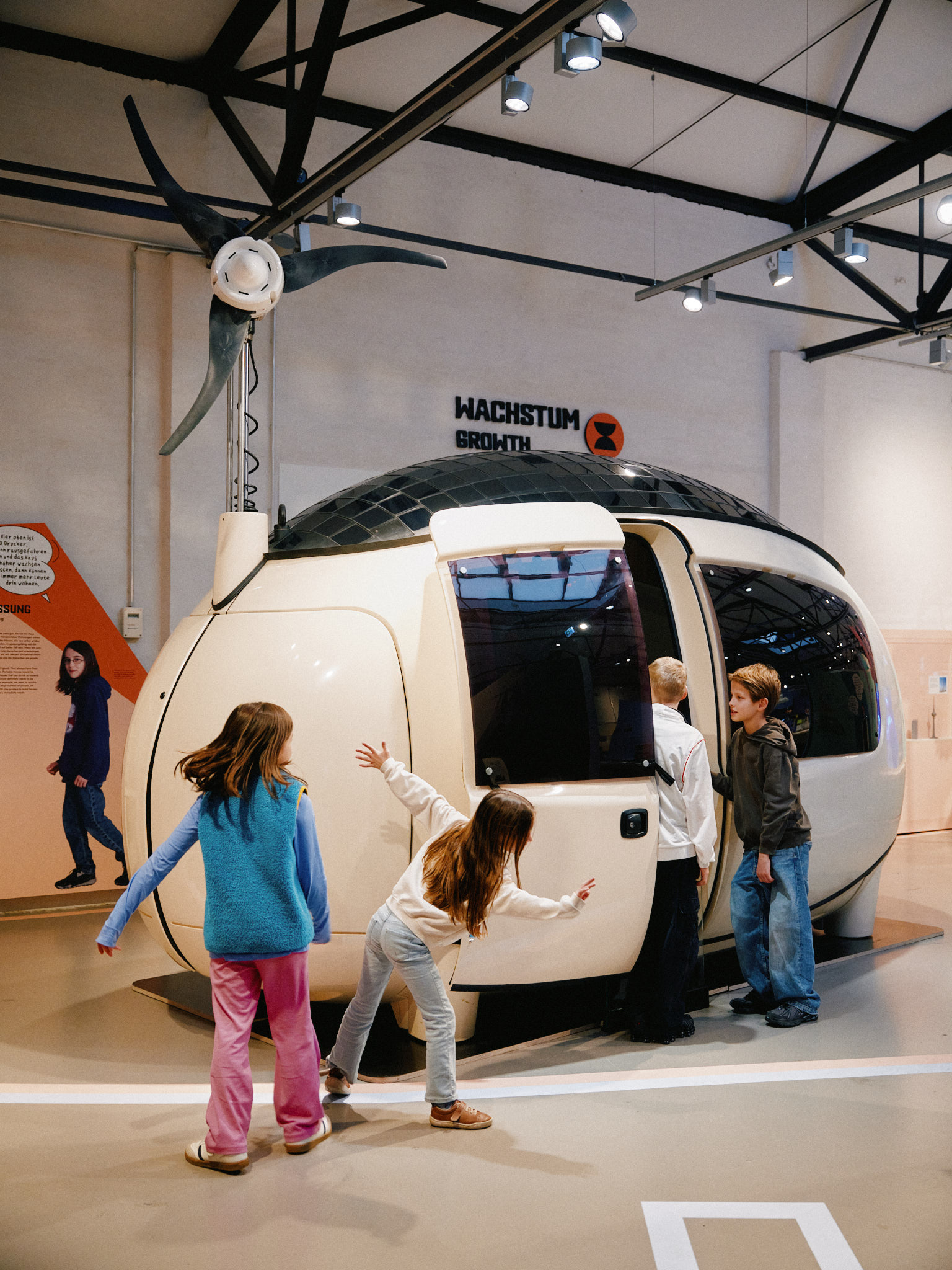
A so-called "House-egg" is a small, round, white house equipped with everything necessary for daily life. It even generates its own electricity from wind and solar power.

This round little house could be set up anywhere in the city where a small apartment is needed quickly. This “Ecocapsule” requires no water or electricity connections. It features cooking and sleeping accommodations as well as a toilet, and is powered by renewable energy.

SDTB/ Photo: Ériver Hijano

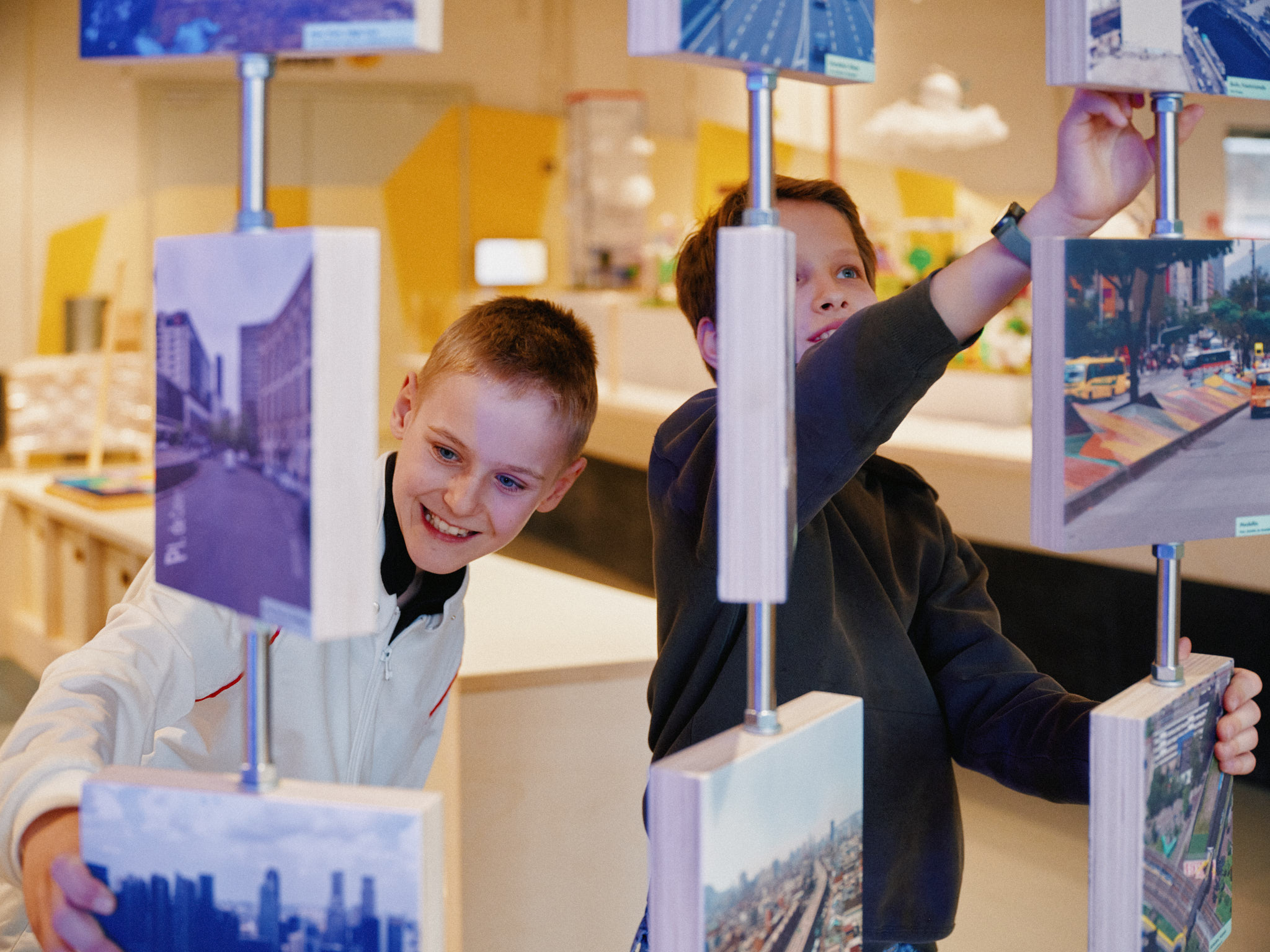
Two boys are standing next to a display featuring a row of photos that can be flipped over.

An interactive exhibit shows different cityscapes before and after a transformation: green oases instead of a gray concrete wasteland, pedestrian-friendly neighborhoods instead of a car-centric city. In the blink of an eye, a dreary concrete landscape turns into the colorful city of the future!

SDTB / Photo: Ériver Hijano

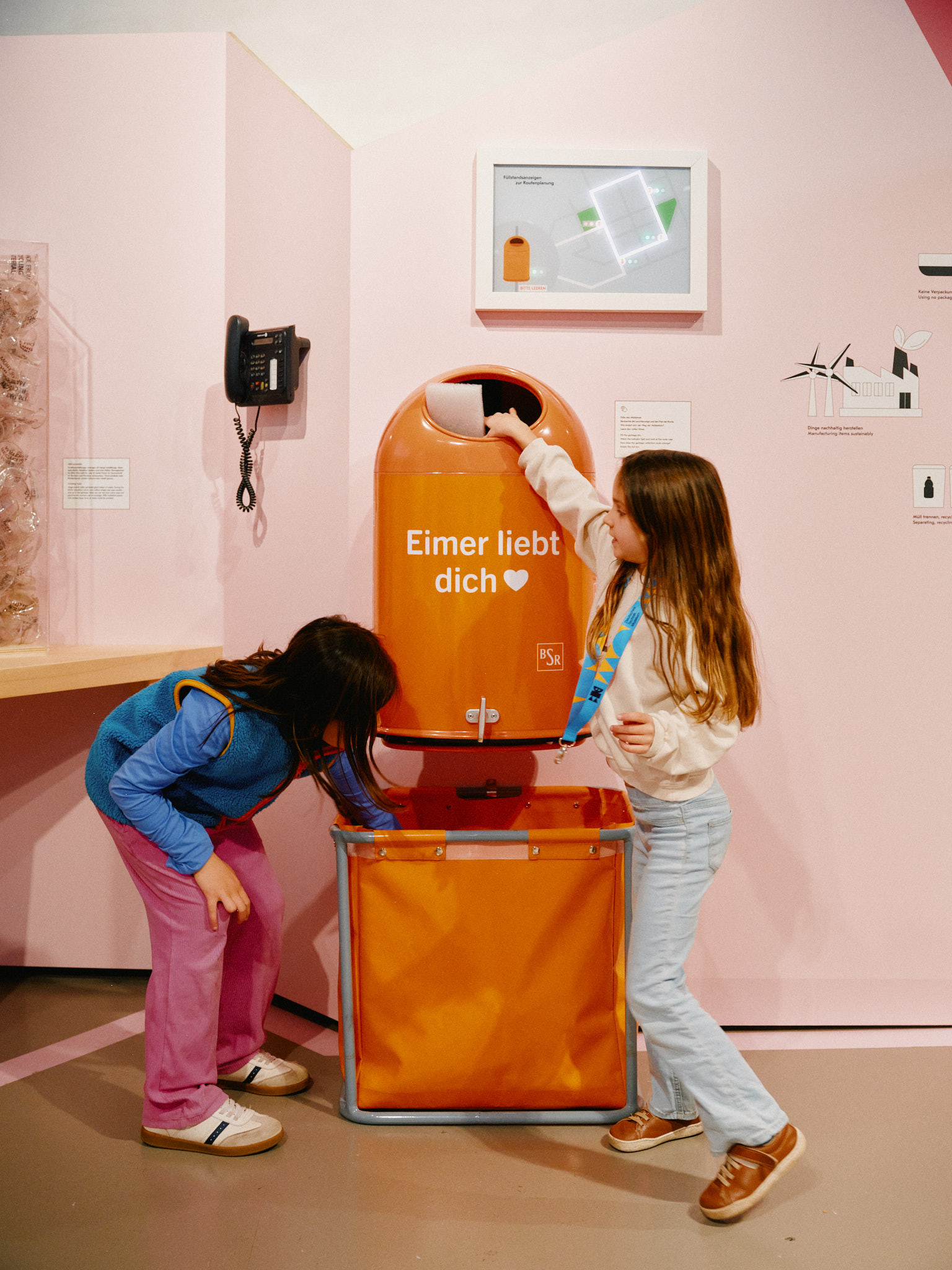
An orange trash can with the words “Eimer Loves You” on it. Two girls are filling the trash can, including an orange bag that catches the trash as it’s emptied. Behind it is a display that shows when the trash can is full.

A smart trash can uses a sensor to signal when it is full and needs to be emptied. Children can try this out for themselves at the exhibition.

SDTB/ Photo: Ériver Hijano

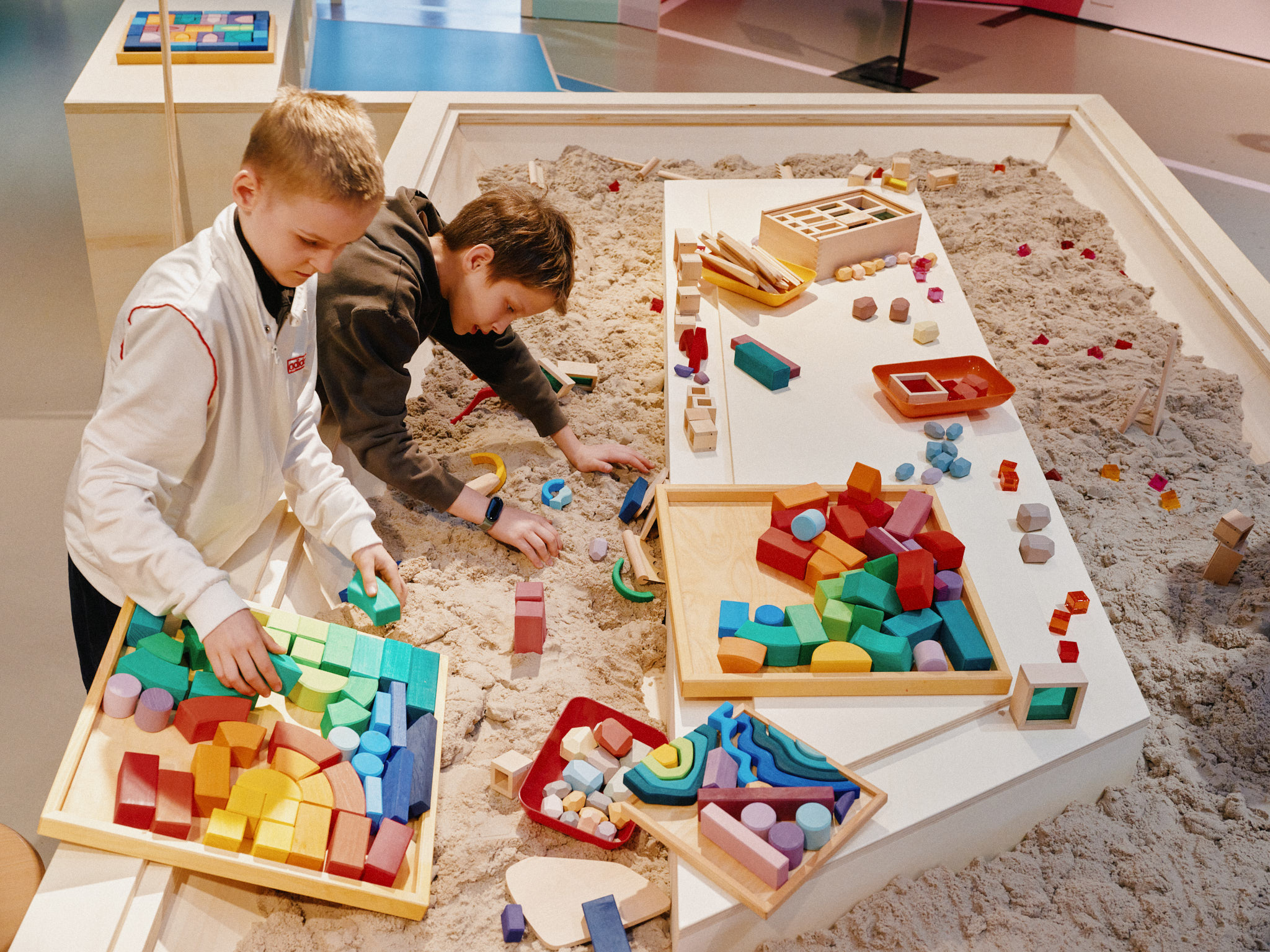
There are many colorful building blocks in a large sandbox. Two boys are building a small town using the sand and the building blocks.

Using kinetic sand and colorful building blocks, children and adults can work on their own or in workshops to bring their ideas for a livable city of the future to life.

SDTB/ Photo: Ériver Hijano

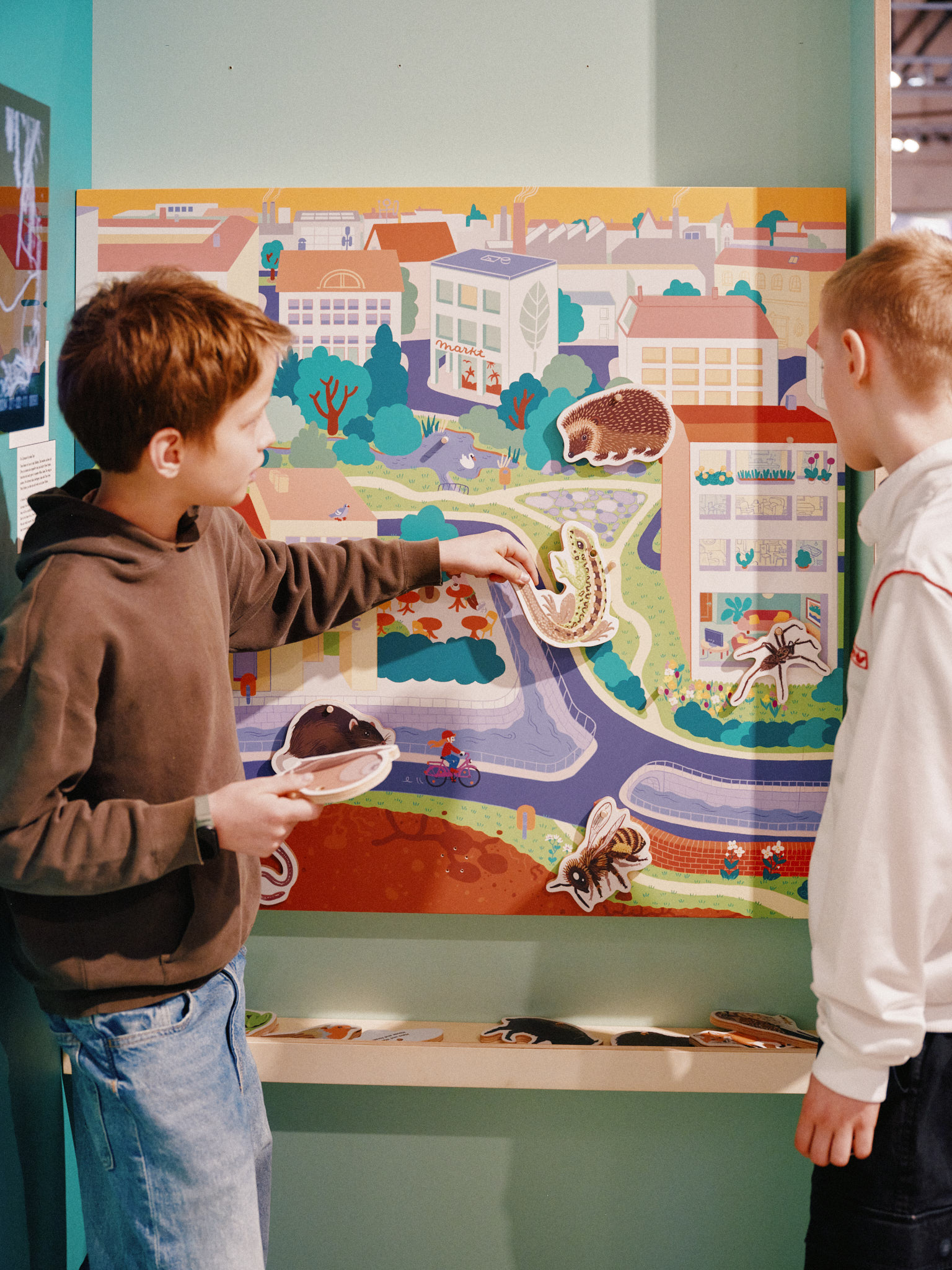
Various animal figures can be attached to different spots on a colorful cityscape. Two boys are trying it out.

Does the lizard feel at home on the street? Or the hedgehog on the balcony? At this interactive station with audio commentary, children can learn which urban environments are ideal for which animals.

SDTB/ Photo: Ériver Hijano

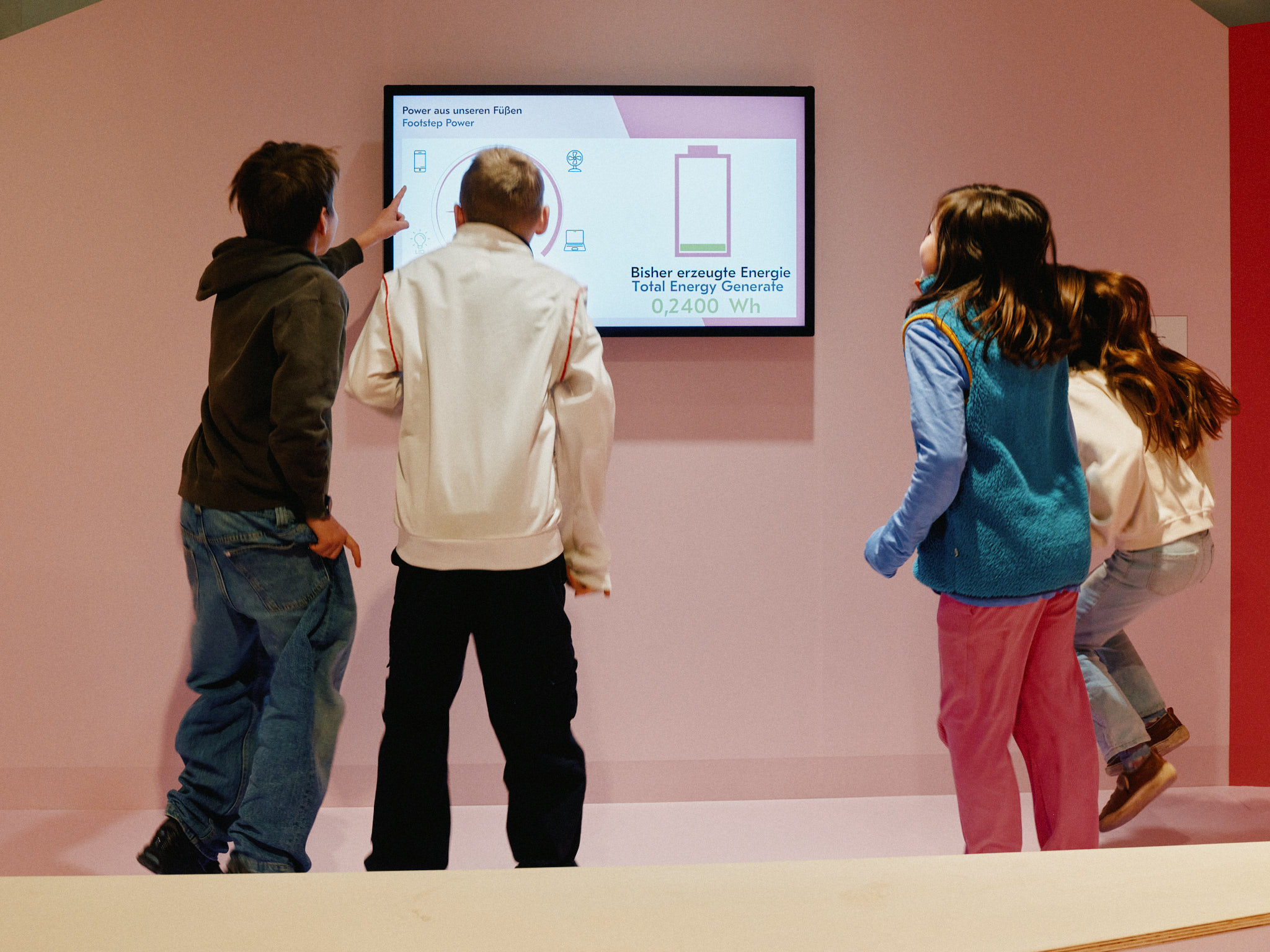
Two girls and two boys are happily jumping up and down. In front of them is a display showing how much energy they're generating.

The longer you jump in the air at this interactive station, the more energy you collect for the city of the future—and the more you fill its energy storage systems. It’s the perfect way to burn off some energy after a long day at the museum. Not just for kids.

SDTB/ Photo: Ériver Hijano

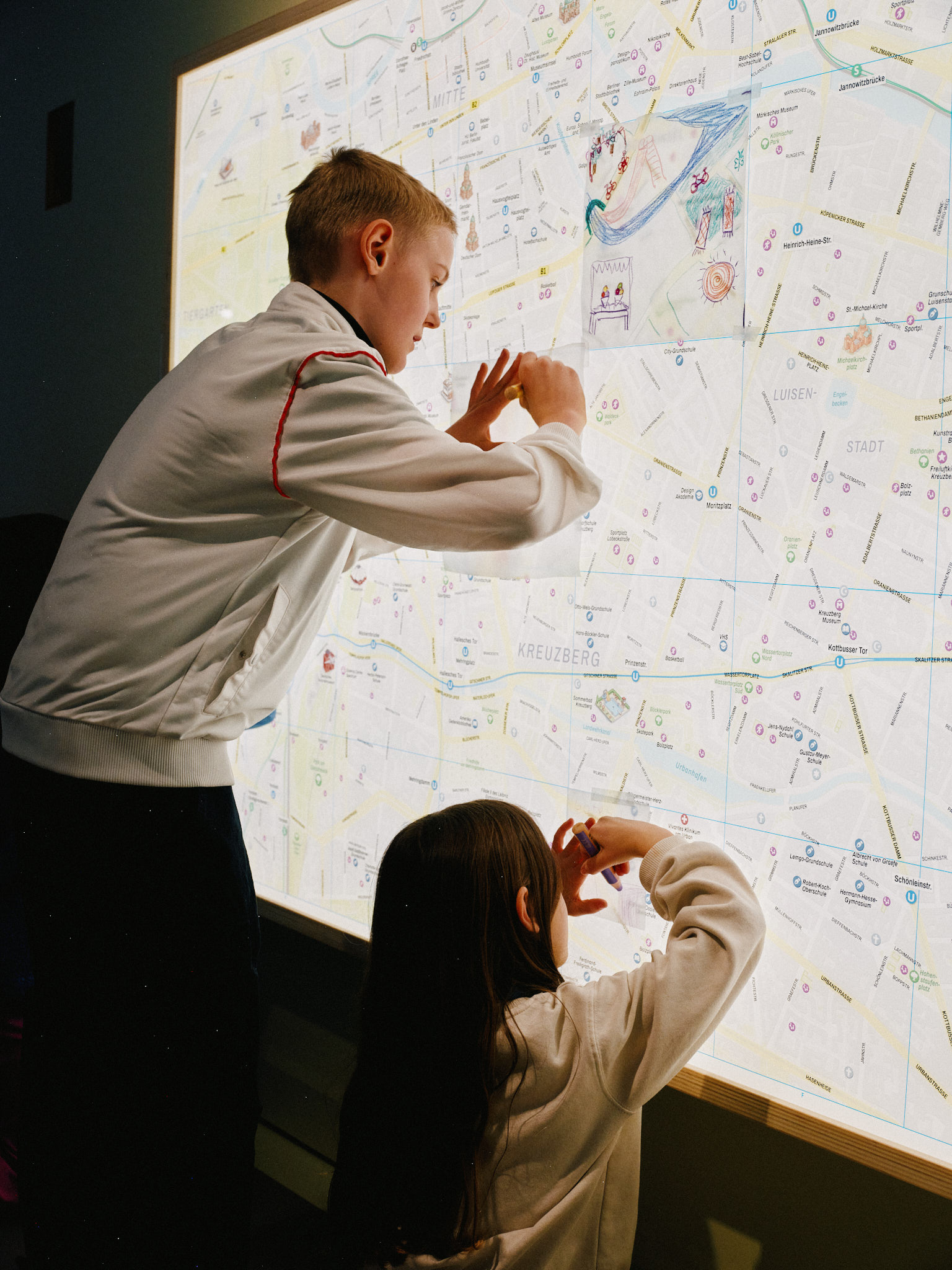
On a backlit city map, children can color alternative city maps and stick them on top. A girl and a boy are hard at work doing this.

Alternative maps can be drawn on an existing map of Berlin and glued onto the backlit surface. It’s amazing how playgrounds and parks suddenly pop up everywhere! This can be done spontaneously during the exhibition or in a workshop.

SDTB/ Photo: Ériver Hijano

Pressemitteilung

Neue Ausstellung: „SuperCity 3000. Unsere Stadt der Zukunft“

Ab dem 27. März zeigt das Deutsche Technikmuseum die Sonderausstellung „SuperCity 3000. Unsere Stadt der Zukunft“. Entwickelt wurde sie mithilfe von 60 Grundschulkindern.

Wie werden wir in der Stadt der Zukunft leben? Damit beschäftigt sich die Sonderausstellung „SuperCity 3000. Unsere Stadt der Zukunft“ im Deutschen Technikmuseum. Das Besondere an der Ausstellung ist, dass sie von Kindern für Kinder entwickelt wurde: Sechzig Grundschulkinder haben Visionen für ihre Zukunftsstadt überlegt und gebaut. Dabei entstanden fantasievolle Stadtmodelle – das Herzstück der Ausstellung. Davon ausgehend werden innovative Projekte, technische Prototypen und Architektur-entwürfe gezeigt, die Zukunftsideen der Kinder widerspiegeln.

Eine drängende Herausforderung

Mit der Ausstellung widmet sich das Museum einem hochaktuellen Thema. Die Gestaltung von Städten ist eine drängende Herausforderung und prägt alle Lebens-bereiche der Menschen. Schon heute leben 90 Prozent der Kinder in Deutschland in Stadtgebieten, im Jahr 2050 werden es über 70 Prozent der Weltbevölkerung sein. Um diese Entwicklung auch als Chance zu begreifen, lautet das Motto der Ausstellung:

„Die Zukunft ist offen, wir können sie mitgestalten!“  Besonders wichtig ist es dem Team dabei, die Stimmen der jungen Generation ernst zu nehmen – ihre Ideen, Ängste und Hoffnungen müssen in die Stadtplanung einfließen.

Fantasievolle Stadtlandschaft

Der zentrale Ausstellungsbereich ist die fantasievolle Stadtlandschaft der Kinder, in der sie innovative Lösungen für die Herausforderungen der Gegenwart präsentieren sowie ihre Wünsche und Hoffnungen in Bilder fassen. So auch die Idee der “Small Houses” von Hollie und Helene: “Unsere Häuser sind dafür da, dass darin Obdachlose wohnen können und sie damit immer dorthin fahren, wo sie hinfahren wollen.” Während sich manche Kinder mit der Verbesserung der Lebensumstände beschäftigen, träumen andere von fantastischen neuen Welten. Einige Kinder reagieren mit ihren Ideen auf düstere Zukunftsprognosen, wie etwa Laura: “Mein Kühlzentrum ist dazu da, um sich zu kühlen, wenn später 40 Grad sind.”

Die Dramaturgie der von studio klv gestalteten Ausstellung folgt konsequent dem partizipativen Prozess. Zunächst werden die beteiligten Kinder vorgestellt. Dann beginnt in einem abgedunkelten Tunnel die Zeitreise. Die Besuchenden treffen auf Zeitmaschinen, welche die Kinder gebaut haben, und werden von deren Stimmen gedanklich in die Zukunft mitgenommen. Am Ende des Tunnels öffnet sich der Blick auf das vielfältige Panorama der gebauten Modelle.

Um die Stadt sind sechs Themenbereiche gruppiert, die sich aus den Ideen der Kinder ergeben:  Gemeinschaft, Klima, Natur, Versorgung, Wachstum und Weite. Hier zeigen spannende Objekte, wie etwa eine Lieferdrohne, eine Unterwasserwohnung, oder auch innovative Baumaterialien, wie das Leben in zukünftigen Städten aussehen könnte. Interaktive Stationen zur smarten Müllabfuhr oder Erdbebensicherheit laden zum Ausprobieren ein. In einem großen Mitmachbereich können die Besuchenden an der Zukunftsstadt mitbauen und eigene Ideen für die Stadt der Zukunft beisteuern.

Ein Begleitprogramm für Schulklassen und Familien sowie ein Podcast ergänzen die Ausstellung. 

 Laufzeit: 27.03. 2026 bis 27.06.2027

Die Ausstellung steht unter der Schirmherrschaft der Bundesministerin für Wohnen, Stadtentwicklung und Bauwesen.