Wind Power in the Museum Park
What's it About?
Learn about energy technology from the past and the future on a walk through the Museum Park. Human beings have been using wind power for about 800 years. The windmills and wind turbines in the Museum Park are impressive examples of this technology.
Wind: An Energy Source of the Past and the Future
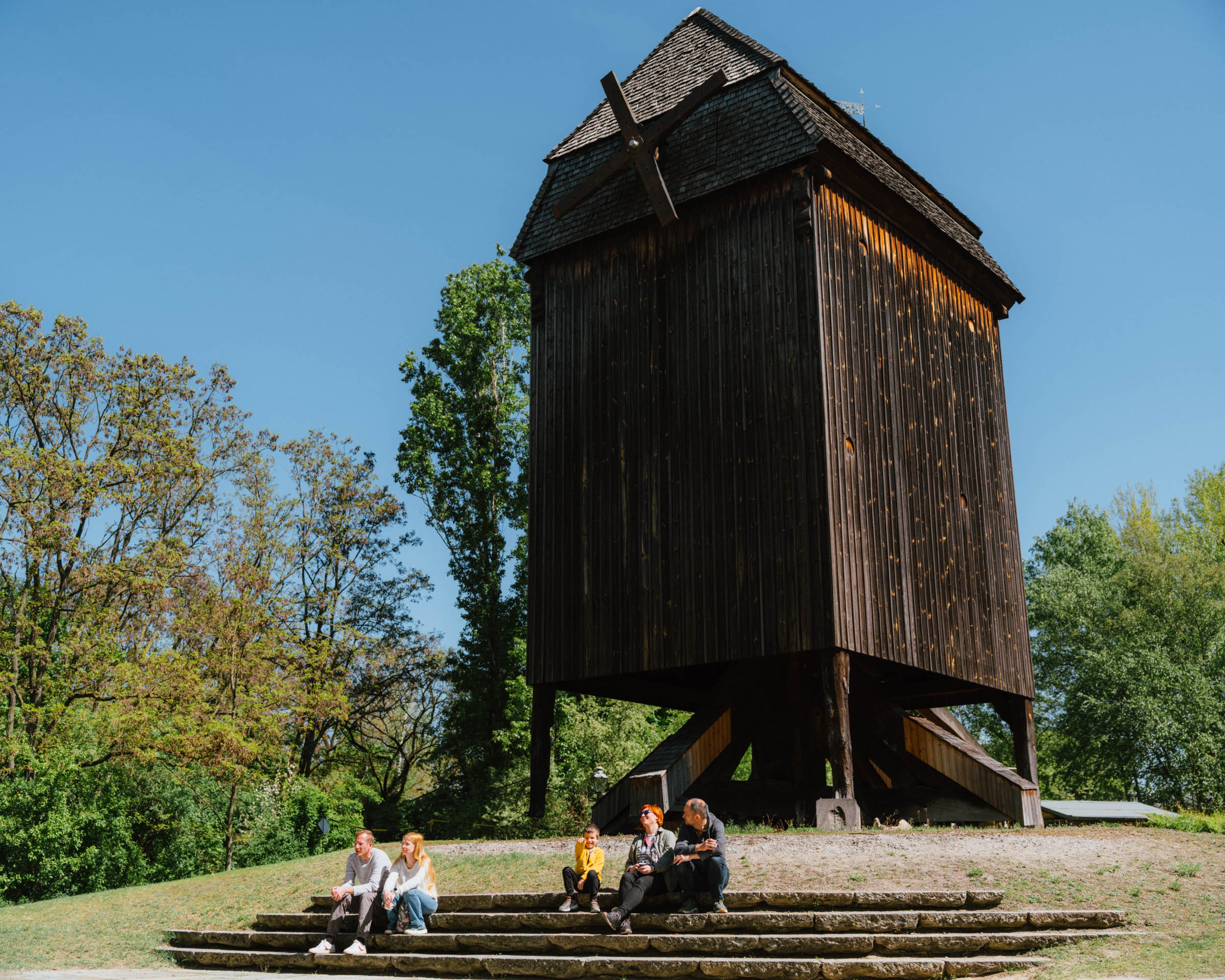
Where we get our energy from is a key issue of our time, especially in light of climate change. Indeed, the type of energy we use has long influenced how we work and move. On the grounds of what is now the Museum Park, there was a path with ten windmills in the 1830s. The millers harnessed the power of the wind to grind grain into grist and flour in their mills. It was then used to bake bread for the growing city of Berlin. Two mills now stand in the Museum Park: a post mill and a smock mill. Demonstrations give visitors the opportunity to see how millers lived and worked.
Mills Convert Wind Power to Rotational Energy
Energy is the ability to set things in motion, radiate heat, or emit light. We often speak of “creating energy,” but strictly speaking that’s not possible. On the other hand, human beings are very good at converting energy. Many examples of this ability are on display in the Deutsches Technikmuseum. Steam engines in an historical workshop and in the roundhouse, automotive engines in the Road Transport exhibition, aircraft turbines in the Aviation exhibition – all of them convert energy from fuel into heat and motion. Windmills such as those in the Museum Park transform the energy contained in wind into kinetic energy. The wind hits the broad blades of the mill and causes them to turn, thus driving the grinding mechanism.
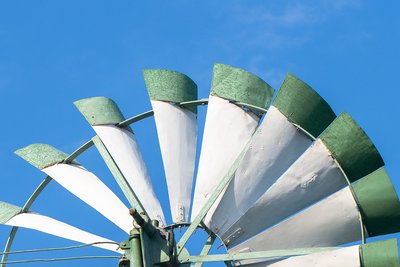
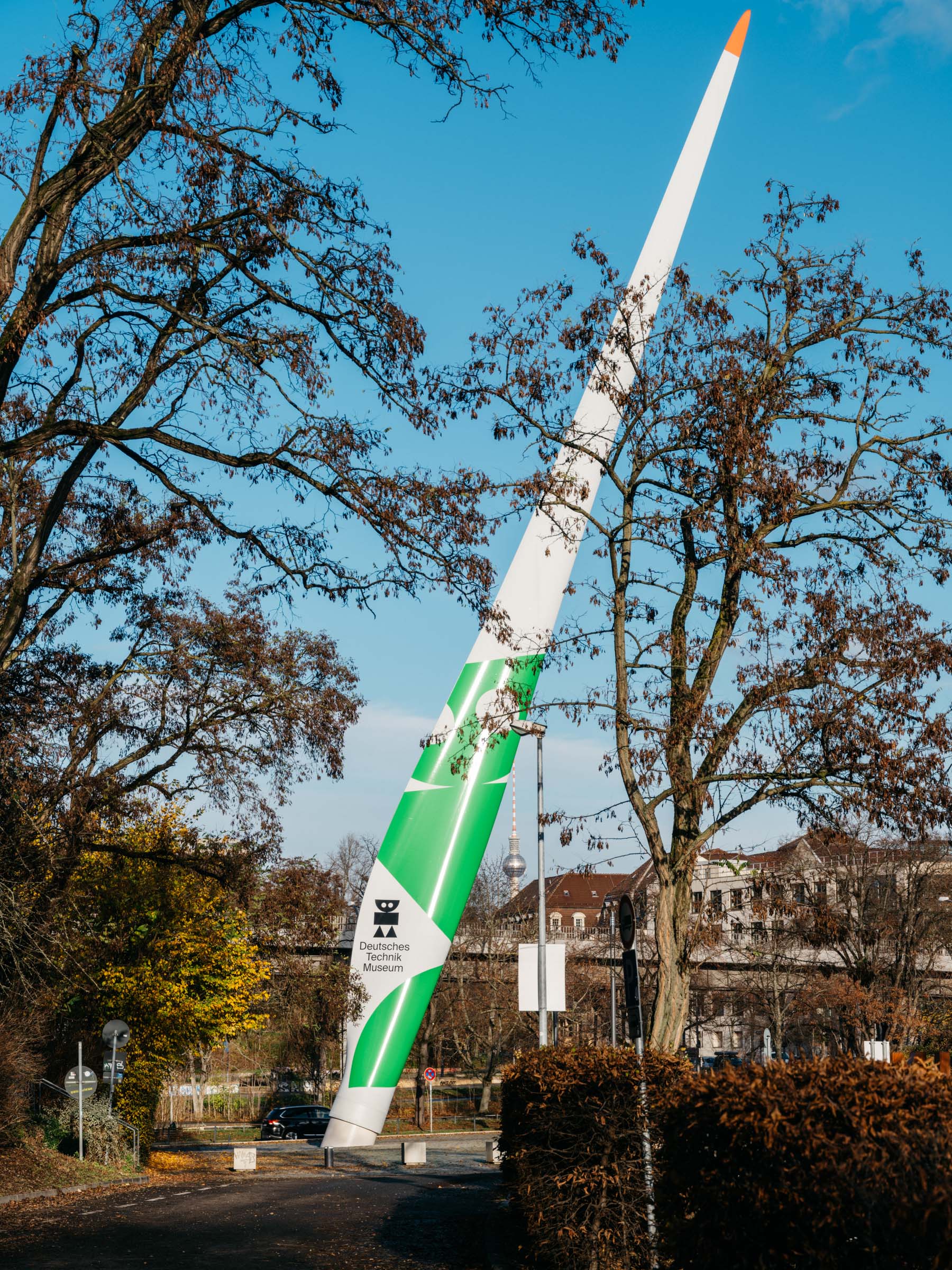
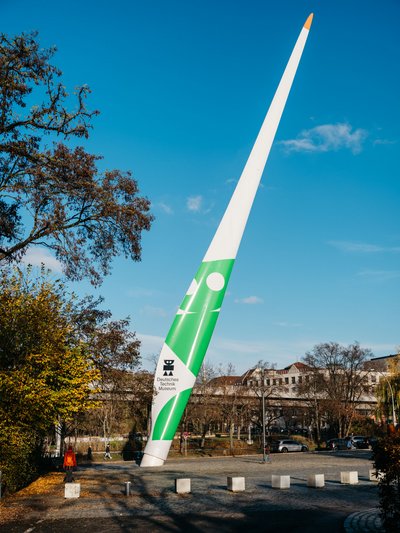
Wind turbines also apply the principle of energy conversion. The Museum Park contains an historic American wind turbine from 1900, whose kinetic energy was used to pump water. In addition, a rotor blade 44 meters long is displayed in front of the museum. It belonged to a Vestas V90 wind turbine from 2010. Turbines of this kind convert the energy of the wind into kinetic energy and then, via a generator, into electricity.
Nature Is the Source of All Energy, Whether from Oil or Wind
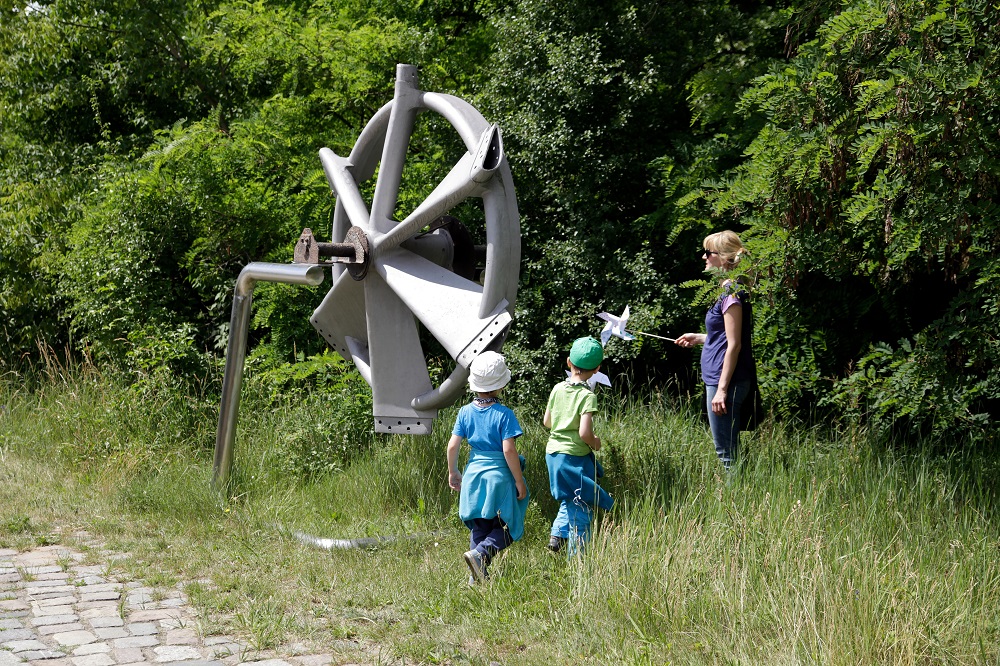
All the energy people use ultimately comes from nature. This is true of fuel for cars, of solar energy for heating systems, and of the wind energy that is fed into the power grid. Processes for transforming and using energy are constantly getting more efficient. Wind power is a perfect example. The smock mill harnesses the wind more efficiently that the post mill, which relies on older technology. The rotor blade of the Vestas V90 is enormously more efficient than the American wind turbine from 1900. And development continues to improve at a rapid pace. In 2005 the Vestas V90, with a nominal capacity of 2,000 kilowatts, was world class. Only fifteen years later, Vestas’s offshore wind turbines now have a nominal capacity of 10,000 kilowatts – five times the power.
Despite technological advances, energy use always entails intervening in nature and consuming resources. How we will meet our energy needs in the future is thus not only a technical but also a social and a political question.

Smock Mill
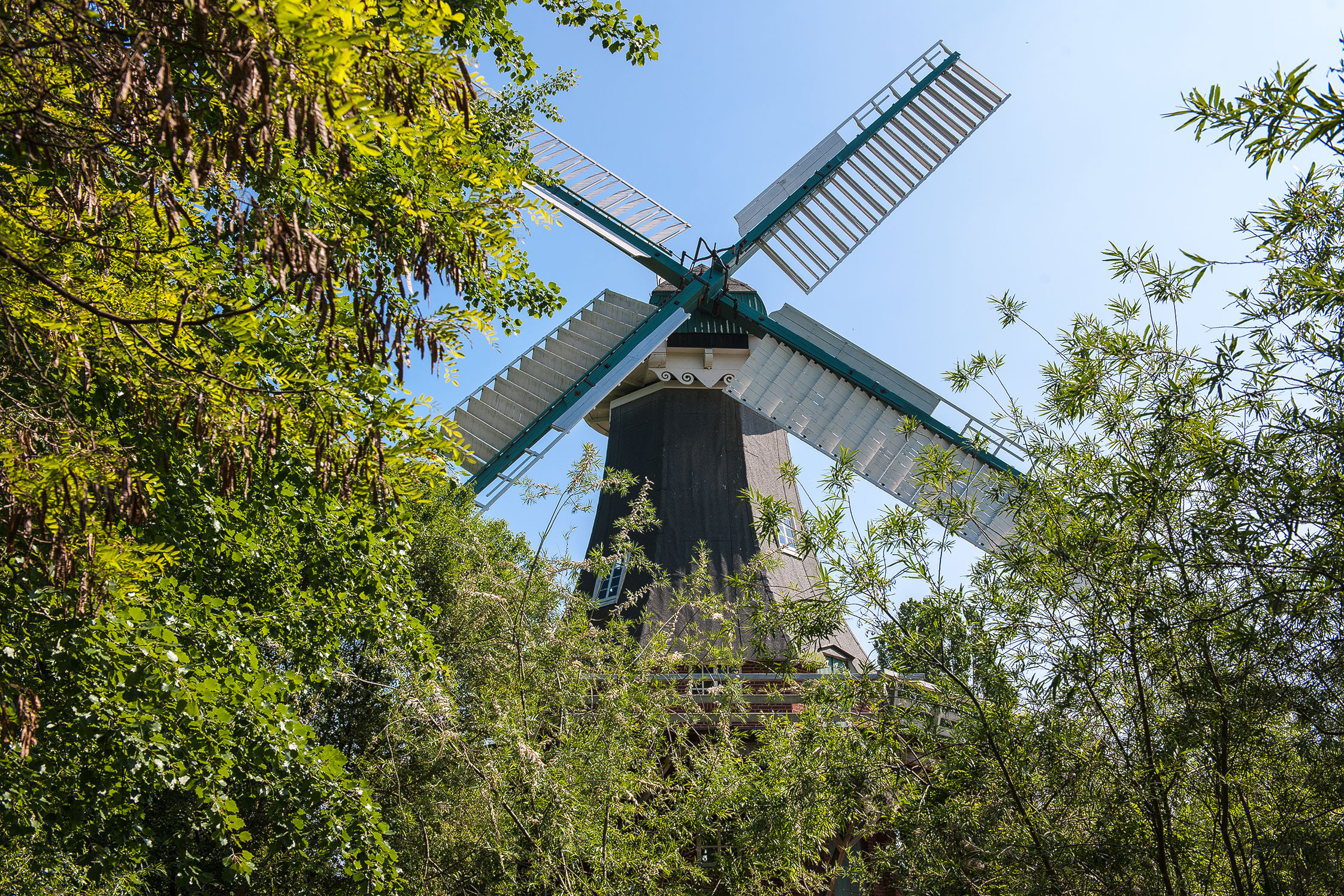
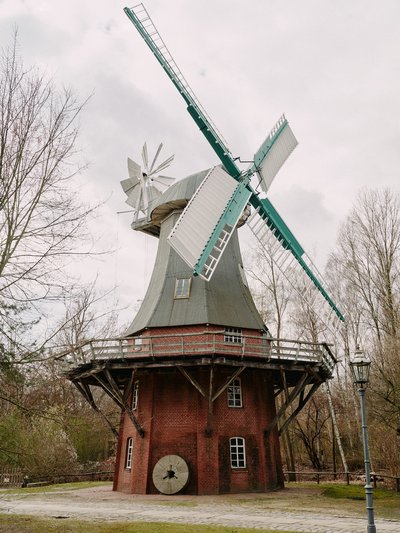
In the 16th century a new type of windmill was developed in Holland. It was used to grind grain and to drain water for the purpose of land reclamation. Unlike with the post mill, the miller did not have to turn the entire body of the mill but only the upper portion – the “cap,” to which the blades are attached. This smock mill was built in East Frisia in 1911. The mill was acquired by the Deutsches Technikmuseum in 1984, at which point it was dismantled and the parts shipped to Berlin by boat. The two-story stone base was put back together in its original form before the mill was restored and reassembled.
1911
SDTB/ Photo: Ériver Hijano
Post Mill
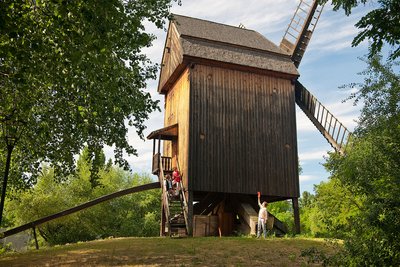
Post mills are the oldest type of windmill in Europe. The first ones were built around 1200 in Normandy and on the Rhine River. The body of the mill is mounted on a post; hence the name. A long pole called the “tailpole” is used to turn the mill into the wind. This mill was built in Köpenick in 1820, but in 1872 it had to make way for Berlin’s expansion. It was subsequently set up in Bohnsdorf, where it was used until it was heavily damaged in the final days of World War II. In 1983 is was restored and set up in the Museum Park.
1820
SDTB/ Foto: C. Kirchner
Vestas V90 Rotor Blade
The rotor blade was produced in Lauchhammer, a city in Brandenburg, by the Danish company Vestas Blades. It was donated to the Technikmuseum as part of the special exhibition “Windstärken” (“Wind Powers”). Its skin is a composite material made of epoxy resin and fiberglass, whereas the spar is made of epoxy resin and carbon fibers. The blade is 44 meters long and weighs 7.2 metric tons. Each Vesta V90 rotor has three such blades and reaches a nominal power output of 2,000 kilowatts at a speed of 13 meters per second.
Vestas Blades Deutschland GmbH, ca. 2007, gift of Vestas Blades Deutschland GmbH
SDTB/ Photo: Ériver Hijano