Sugar
What's it About
Sugar is more than just a sweetener for coffee or tea. There are very few things in the world that aren’t connected to sugar in one way or another. Discover the fascinating history of this biomolecule in our permanent exhibition “Sugars and Beyond! Food – Matter – Energy”!
A Material with (almost) Limitless Possibilities
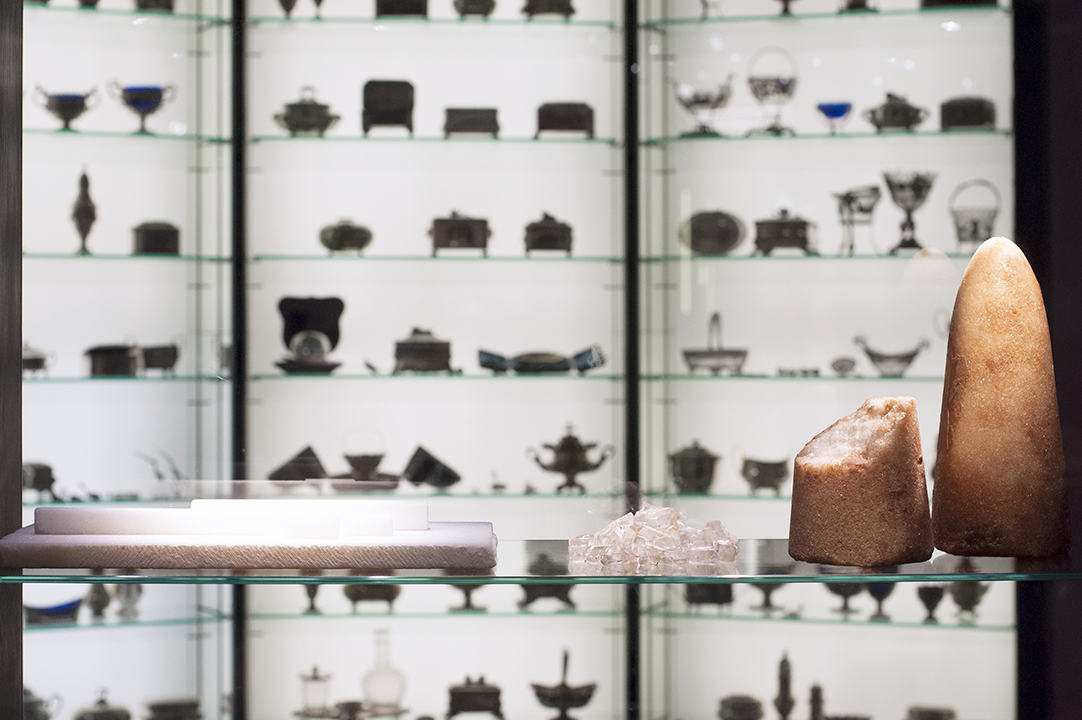
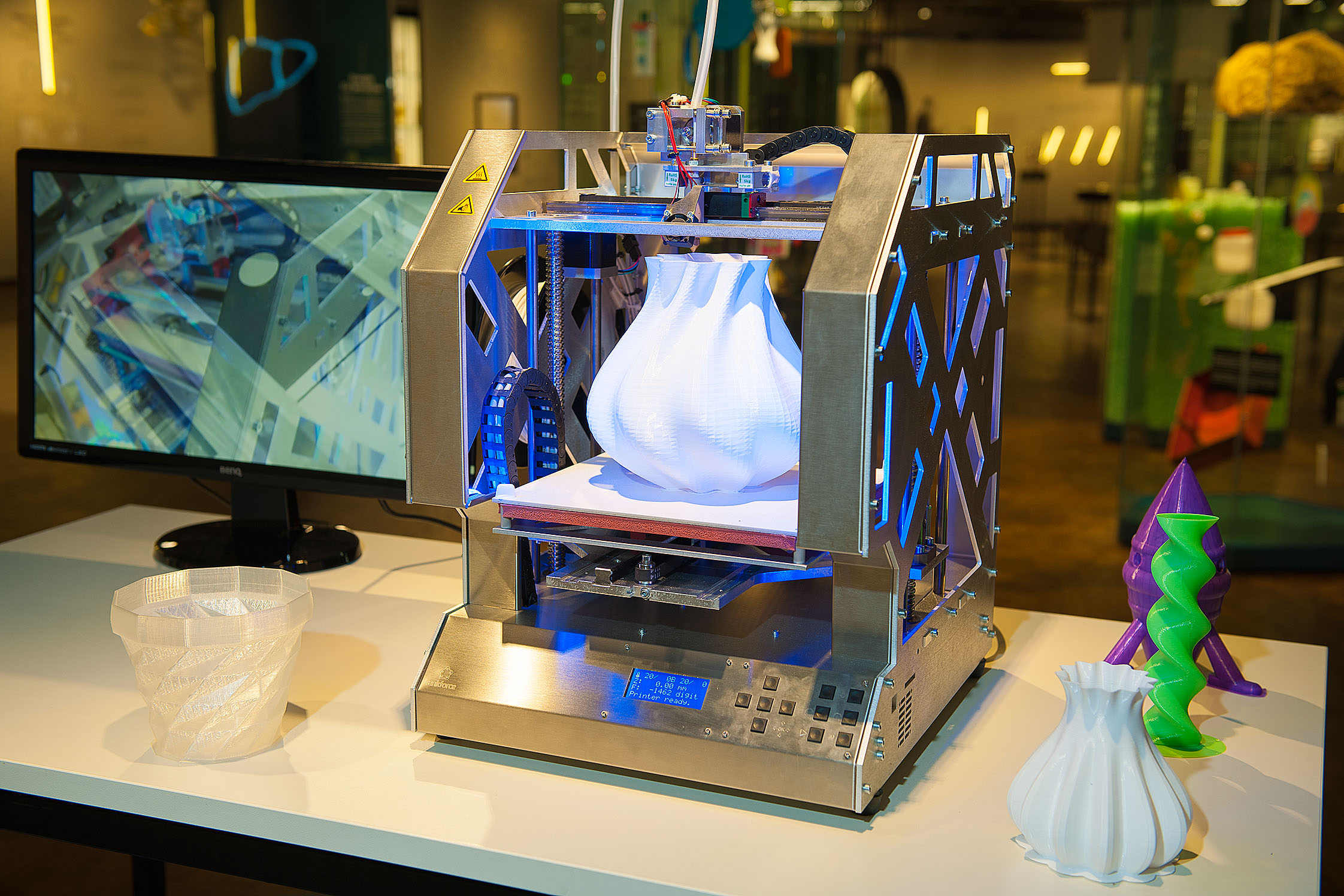
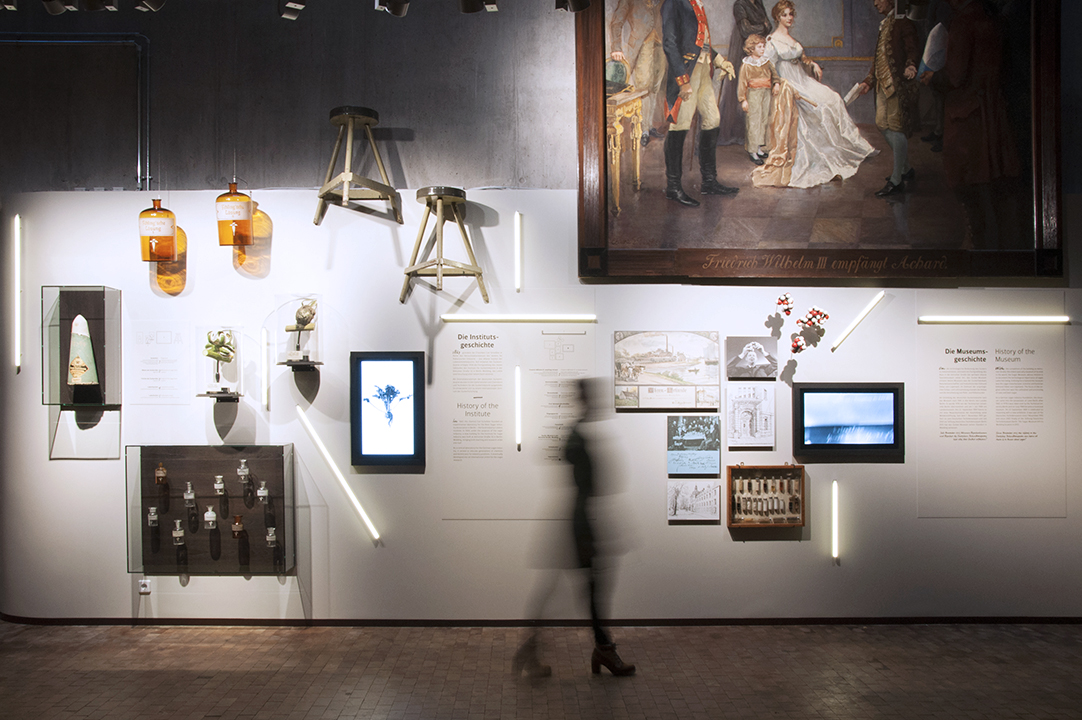
With the exhibition “Sugars and Beyond!,” the Sugar Museum—which began in 1904 at the Institute for the Sugar Industry in Berlin-Wedding—has found a new home at the Deutsches Technikmuseum. It offers a fascinating overview of the possibilities offered by sugar and the social changes it has set in motion. The “queen of crops,” the sugar beet, symbolizes an agrarian-industrial revolution of the past. New technologies that use sugar molecules as energy storage, bioreactors, or building materials for anything a 3D printer can produce represent the future.
The World Eats Sugar, and the World Is Sugar
When people say “sugar” in everyday life, they usually mean sucrose, also known as table sugar or granulated sugar. This sweet white substance, which makes snacking so irresistible, was still a luxury item reserved for emperors and kings in Europe 500 years ago. Between 1690 and 1790, 12 million metric tons of cane sugar were imported into Europe. Today, Europeans consume that same amount of sugar in less than a year.
In the past, sugar came from sugarcane grown in the colonies. The cultivation and production of sugar were therefore closely linked to the exploitation and enslavement of people, mostly from Africa. The sugar beet then opened up a new source of domestically produced sugar. The scientific foundations for sugar beet breeding were laid in Berlin in the mid-18th century by the chemists Andreas Sigismund Marggraf and Franz Carl Achard.
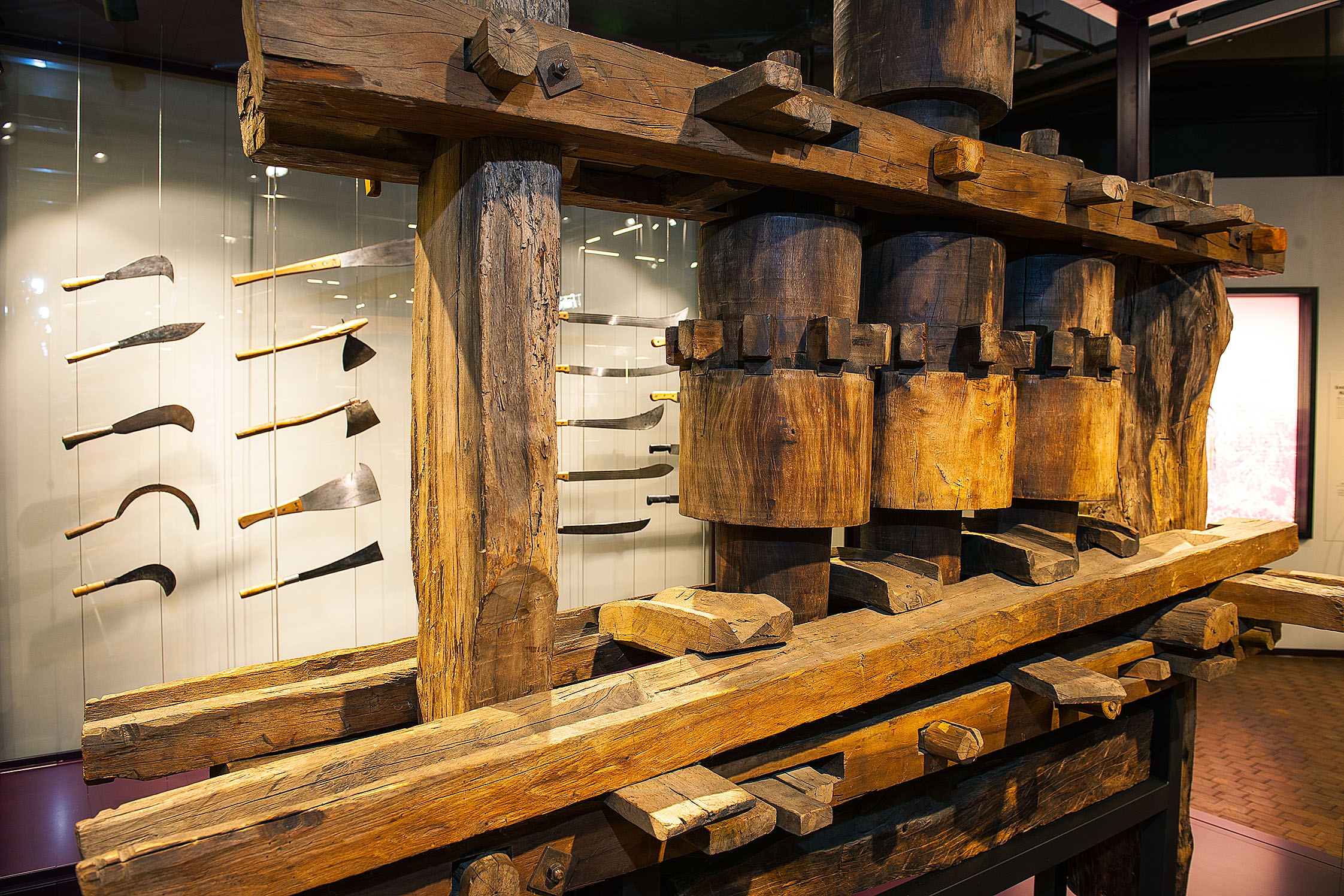
“Sugars and Beyond!” explains to visitors how this breeding innovation sparked an economic revolution in agriculture. By the end of the 19th century, beet sugar was already the German Empire’s most important export. Among other things, the exhibition showcases the equipment that made this possible—from the beet-topping sled and the furrow opener to the modern beet harvester in Ferrari red.
But it’s not just table sugar that ends up in our stomachs. In fact, there are countless different sugar molecules that can also link together to form complex chains. Cellulose and chitin occur in abundance in nature, and even in our own bodies, a wide variety of sugar compounds are components of vital structures, right down to DNA. The world eats sugar, and the world is sugar.
Sugar as a Material, Energy Source, and in Medicine
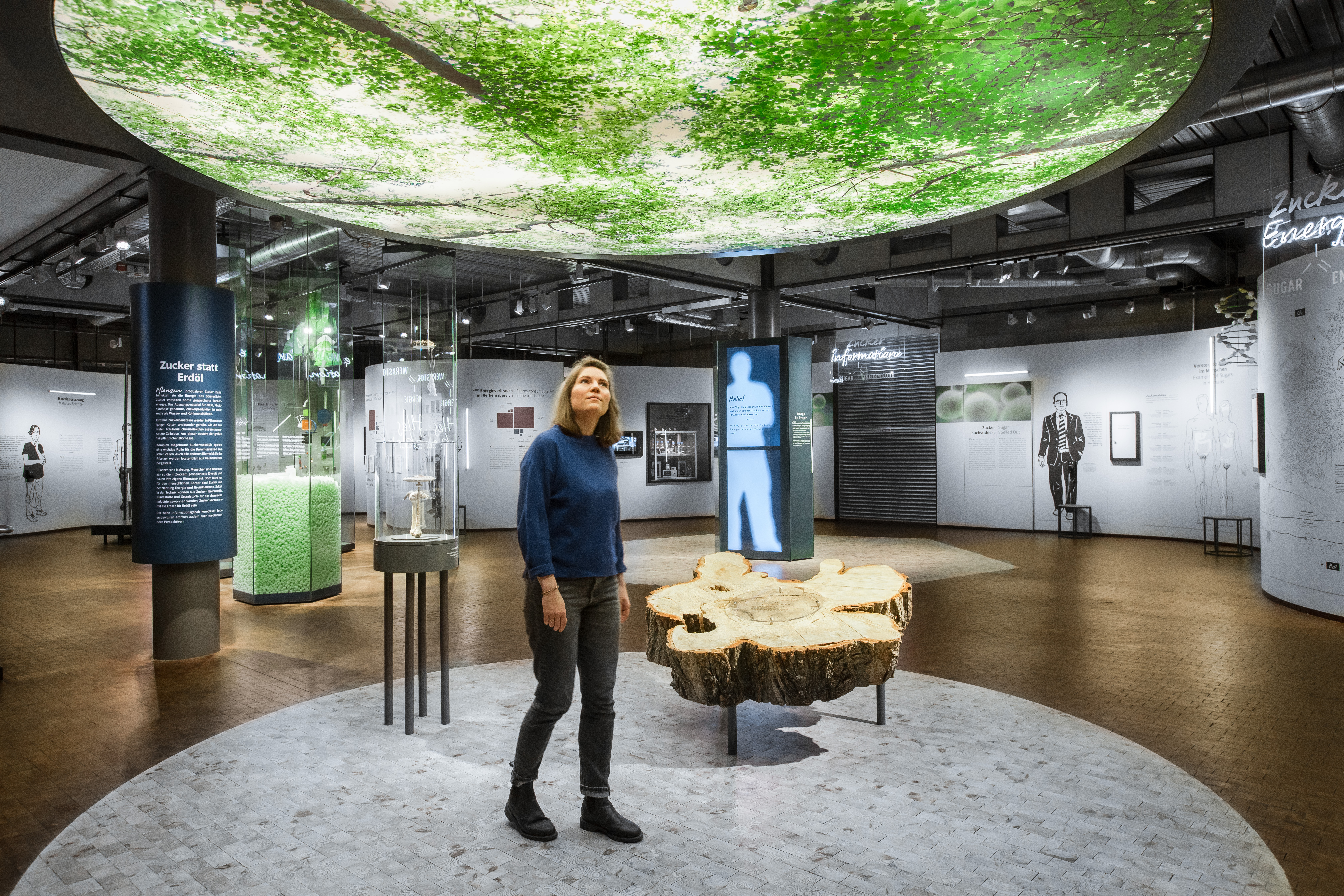
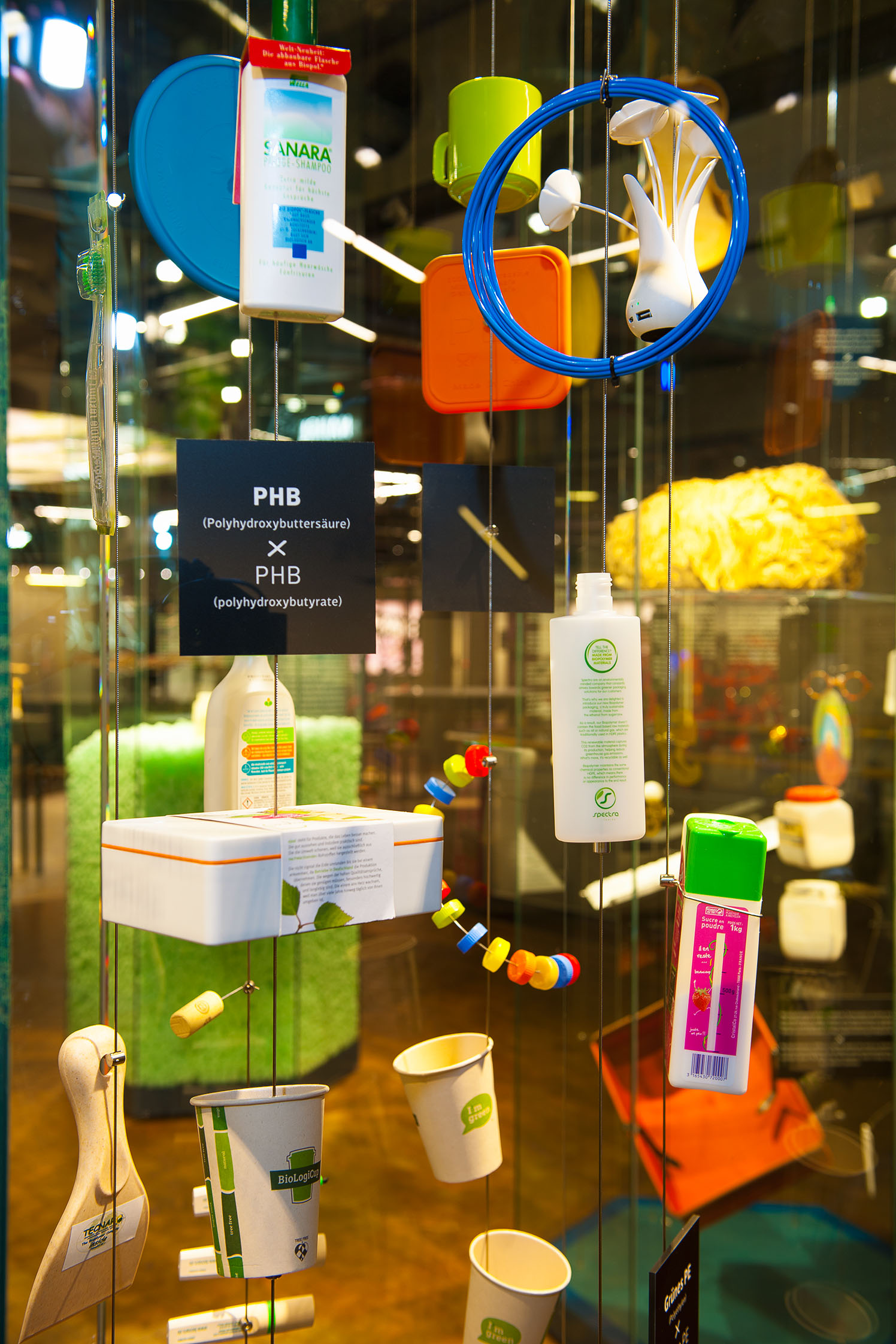
Cellulose, a complex sugar, is the building block of plants and has been used by humans for thousands of years as a construction material and fuel — for example, in the form of wood. Early plastics, such as celluloid — on which the cinema recorded its film stories until recently — are also based on sugar chain molecules. The future lies in biodegradable plastics, which are also primarily made from sugar molecules.
Sugar is produced during photosynthesis and, so to speak, contains stored solar energy. This energy can be harnessed for technical purposes. All forms of bioenergy ultimately derive from sugar.
The best-known example is fermentation into the alcohol ethanol, which we recognize as a 10 percent additive in gasoline (E10) at the gas station. The exhibition also explains the connection to sugar in other bioenergy sources, such as biogas and biodiesel. The numerous sugar structures in our body’s cells and proteins offer new avenues for medical research.
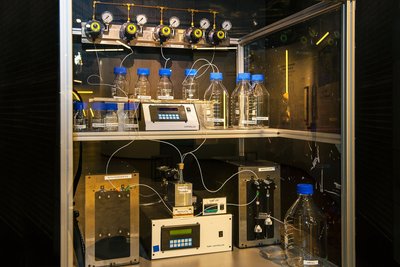
Oligosaccharide Synthesizer
Professor Peter Seeberger developed a device at the Massachusetts Institute of Technology that can be used to specifically assemble sugar chains from individual molecules: an oligosaccharide synthesizer. Medical professionals can use these sugar chains to combat diseases. The prototype of the device, which is now being exported all over the world, is on display in the “Sugars and Beyond!” exhibition at the Deutsches Technikmuseum.
2006, on loan from the Max Planck Society
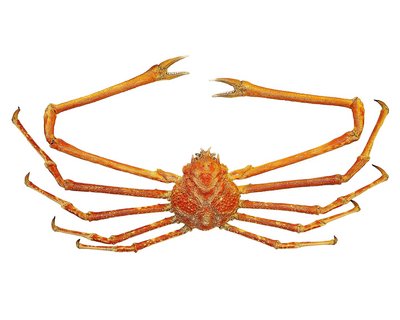
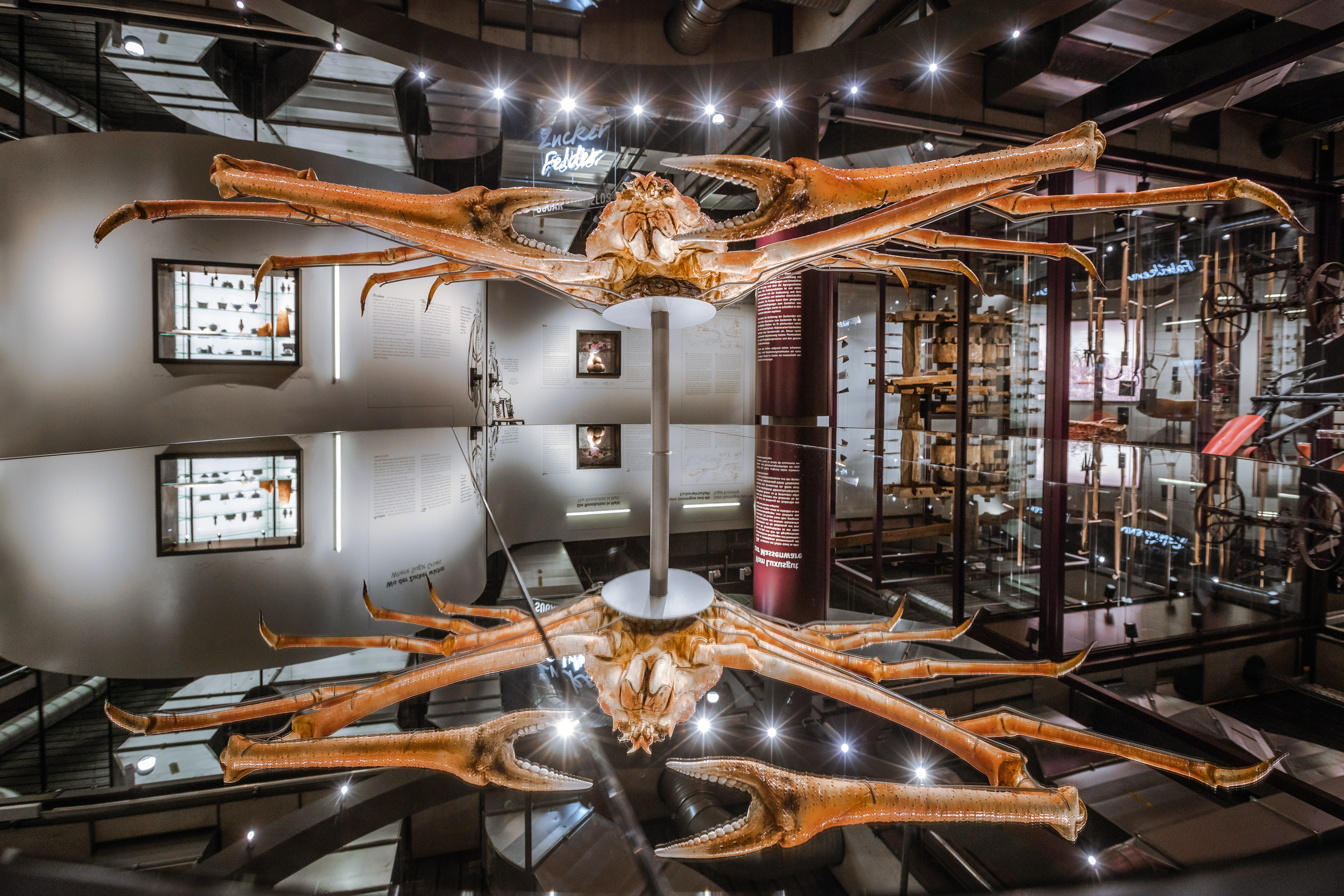
Trockenpräparat einer Japanischen Riesenkrabbe
Der Panzer dieser Japanischen Riesenkrabbe (Macrocheira kaempferi) besteht aus dem Zuckerkettenmolekül Chitin. Sie ist die größte Krebsart der Welt. Die Tiere leben in 300 bis 400 Meter Tiefe im Pazifik rund um Japan. Das Chitin ist ein entscheidender Bestandteil ihres Außenskeletts. Das gilt für alle Gliederfüßler, zu denen neben Krebsen auch Spinnen und Insekten gehören.
undatiert
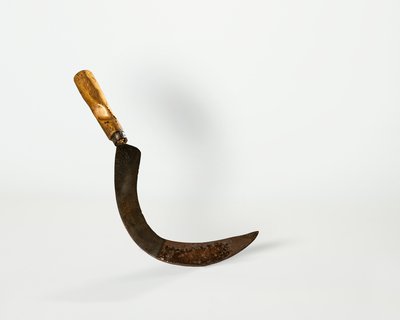
Sichel zum Rübenköpfen
Dieses Sichelmesser erhielt eine junge Frau 1926 von einem Schmiedemeister als Hochzeitsgeschenk. Mit der Sichel befreiten die Erntearbeiterinnen die Rüben nach dem Roden von Erdklumpen und schnitten dann den Rübenkopf und die Blätter ab. Diese Sichel war mindestens 26 Jahre lang im Einsatz. Trotzdem musste die sich zur Spitze verjüngende, nach innen gewölbte Klinge nie geschärft werden. Dafür sorgte alleine die Benutzung.
1926, Schenkung: Wilhelm Barte
![[Translate to English:] The oil painting depicts a scene that never actually took place: Franz Carl Achard is presenting a document to King Frederick William III of Prussia and Queen Luise, who is seated in the centre of the picture. A child is standing next to the queen, who is dressed in white.](/fileadmin/_processed_/d/3/csm_technikmuseum-zucker-gemaelde-clara-fischer_e50c69a47f.jpg)
Gemälde „Friedrich Wilhelm III. empfängt Achard“
Ein historischer Moment: Franz Carl Achard, Chemiker an der Berliner Akademie der Wissenschaften, überreicht dem preußischen König Friedrich Wilhelm III. den ersten Rübenzucker. Die Begegnung, die das Gemälde von Clara E. Fischer zeigt, hat jedoch nie stattgefunden. Der König erhielt 1798 von anderer Stelle eine Zuckerprobe, die Achard in der Berlinischen Zuckersiederey Compagnie hatte raffinieren lassen. Daraufhin finanzierte der Monarch dem Zuckerforscher den Bau der ersten Rübenzuckerfabrik in Cunern/Schlesien.
Clara E. Fischer, 1903