This website uses cookies

This website uses cookies to improve user experience. By using our website you consent to all cookies in accordance with our Cookie Policy.

Essential cookies enable basic functions and are necessary for the website to function properly.
Statistics cookies collect information anonymously. This information helps us to understand how our visitors use our website.
Marketing cookies are used by third parties or publishers to display personalized advertisements. They do this by tracking visitors across websites.
Jump to main content
The words "Repair!" with hands holding various objects behind them, set against a green background.

Repair

7.12.2022 — 3.9.2023

Repair!

What's it About?

Repairing is sustainable and a lot of fun – that’s what this special exhibition for families shows! Running from 7 December 2022 to 3 September 2023 at our Ladestraße location, the exhibition offers many opportunities for participation as well as free workshops.

Fixing Things Makes Sense!

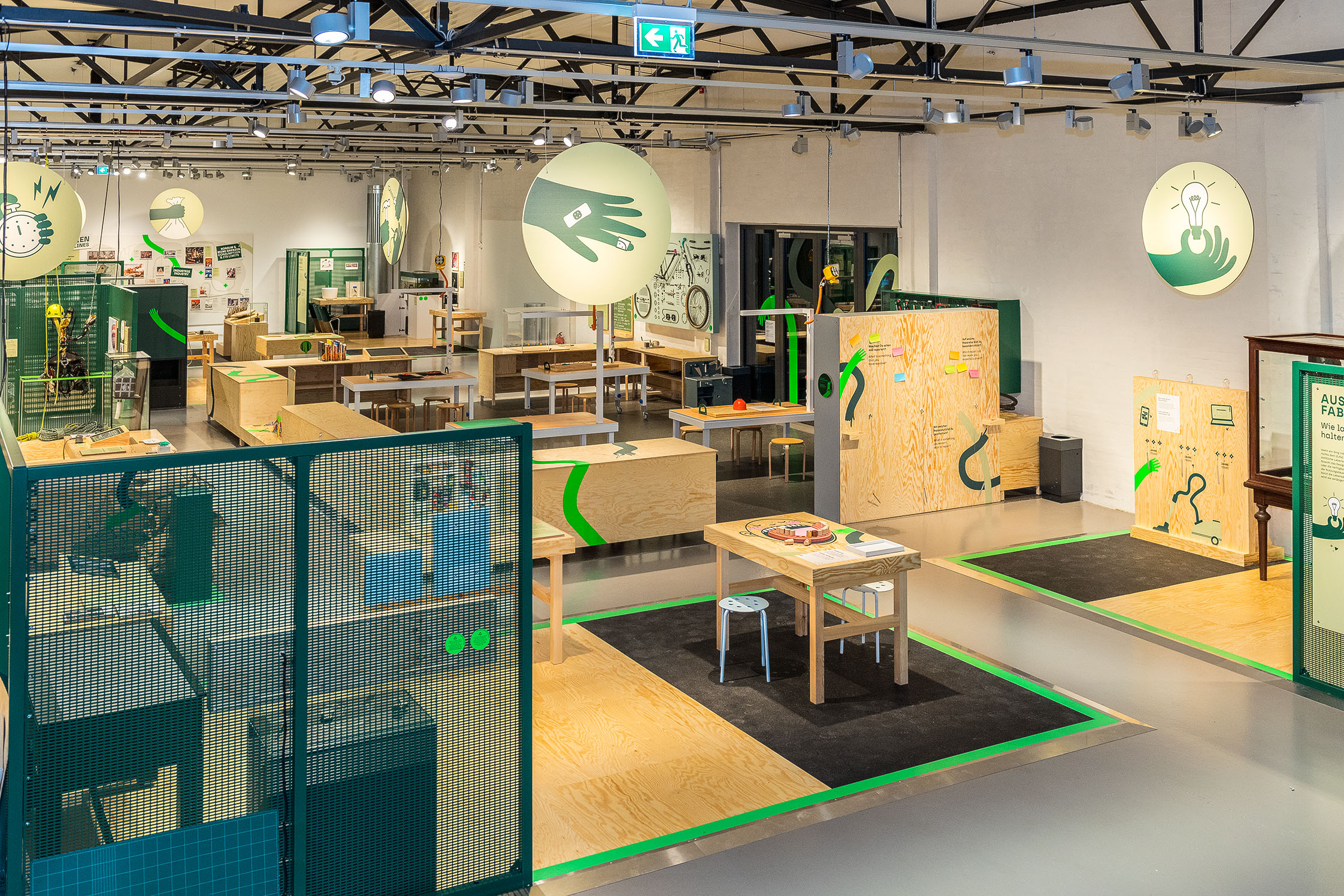
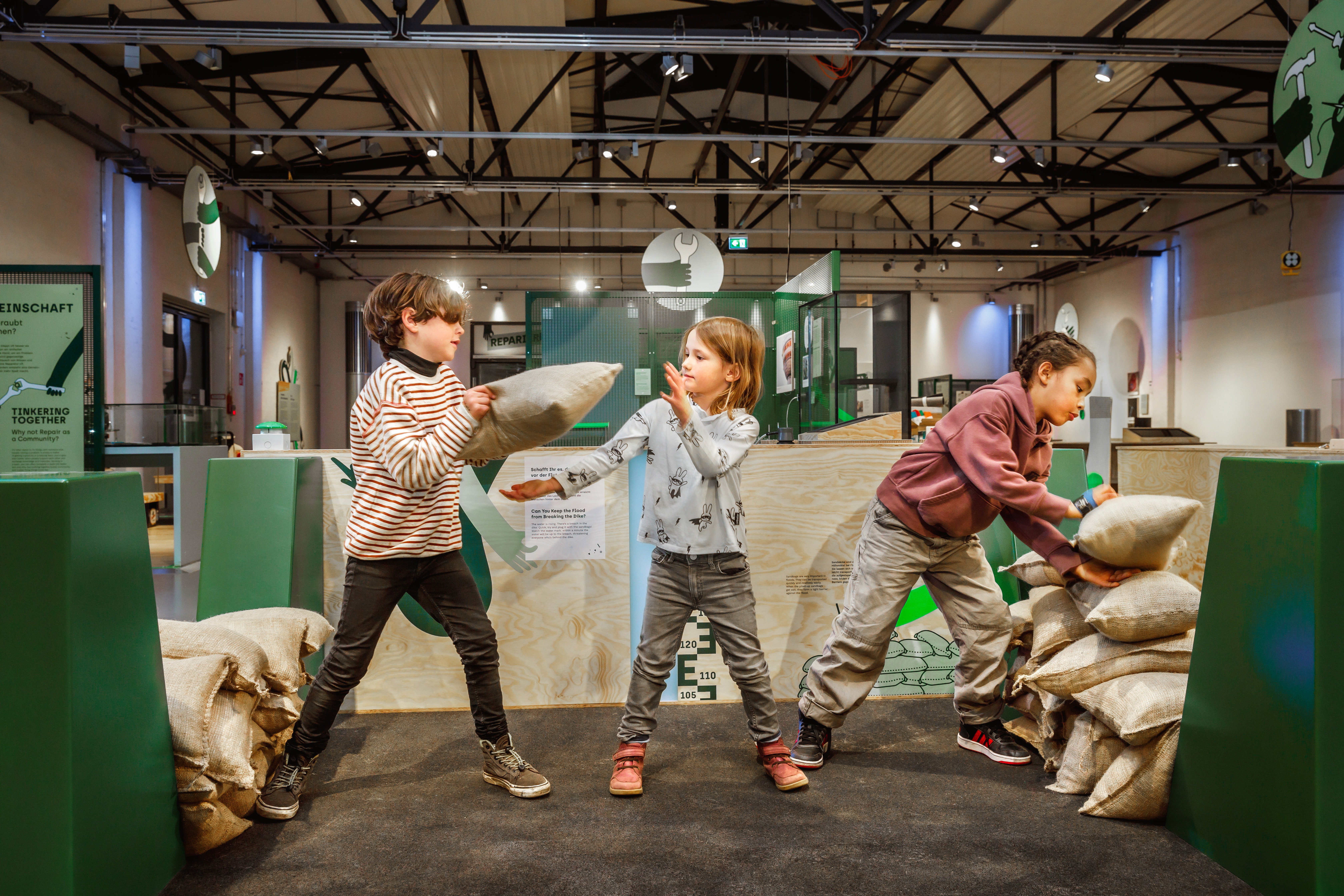
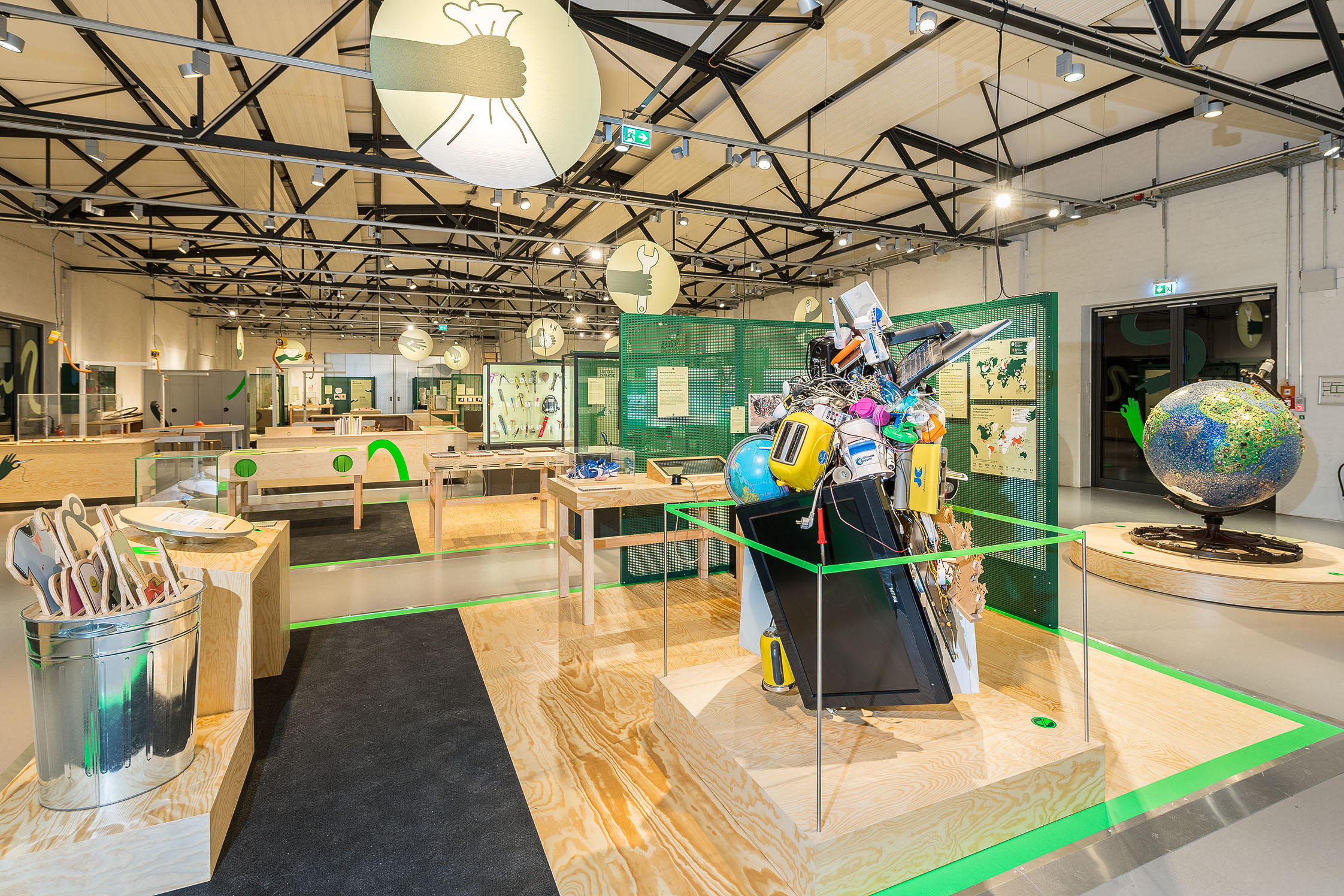
Whether it’s a cell phone, sneaker, or bicycle, it’s always worth trying to do repairs. Every time we do, we learn how the thing works, and we also hang onto it instead of throwing it away and buying something new. Extending over 500 square meters, the special exhibition Repair! Use Don’t Lose shows how important repairing is for our throw-away society in the face of the climate crisis. Designed specifically with families in mind, the exhibition in the museum’s Ladestraße location offers a lot of participatory activities. Visitors young and old can “dive in” together in our well-equipped hands-on workshop and at interactive stations, where they can do things like darn a hole in a giant sock or fix a broken dike. This direct involvement proves it: fixing things not only makes sense but is also a lot of fun! School classes can book free repair workshops.
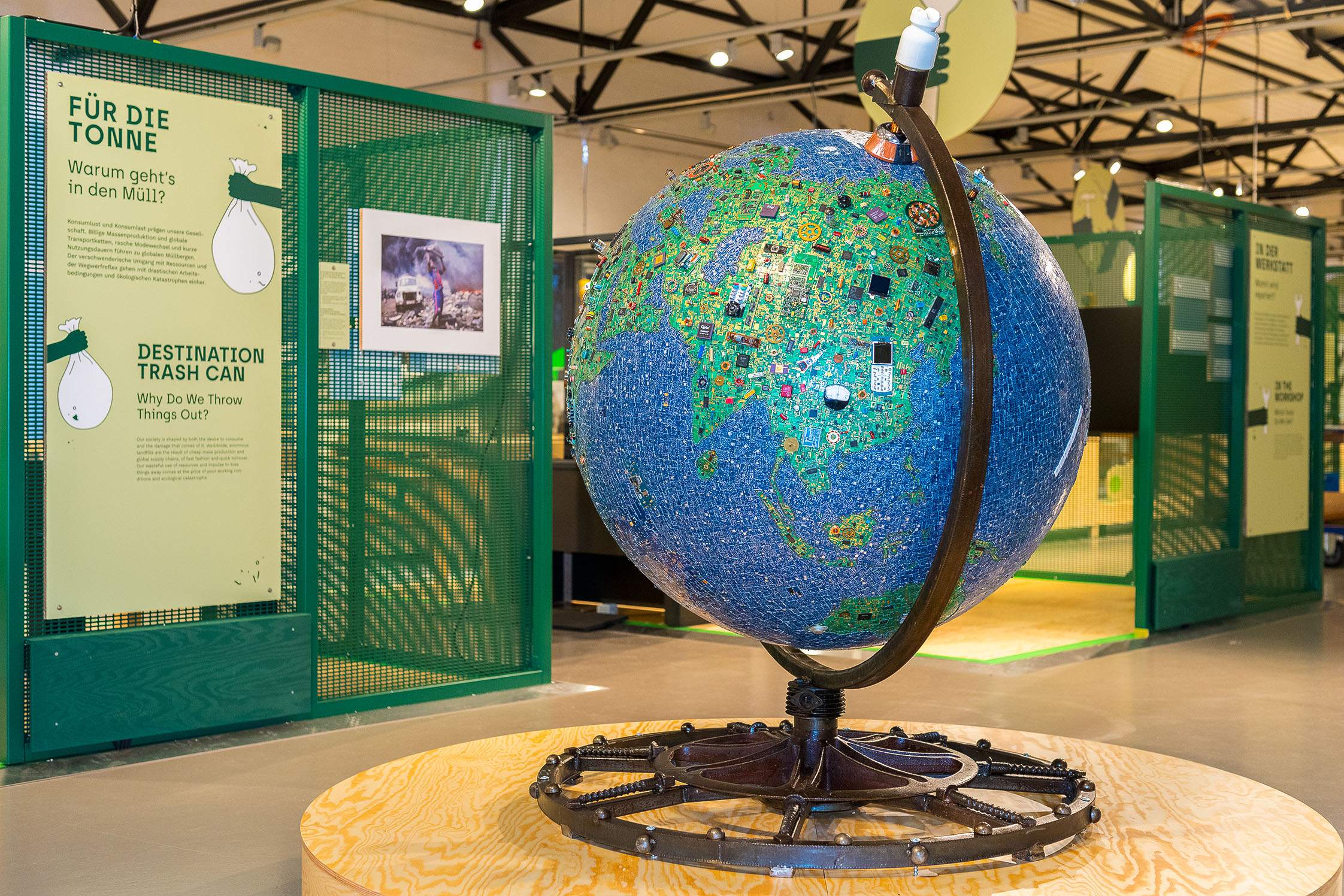
A large globe is on display in the exhibition’s entrance area. Its surface depicts the globe as a mosaic of electronic waste: the oceans are made of small blue circuit board pieces, forests of green circuit boards, and mountains of brown cables.
The opening piece of the exhibition. Unchecked consumption is completely littering the Earth. That is the idea behind artist Muharrem Batman’s scrap globe. While the globe looks like the beautiful blue planet from a distance, up close it turns out to be a sculpture made of electronic waste. SDTB/ Photo: C. Kirchner 1/1

Lived Sustainability

Doing repairs is lived sustainability. Every year, a family of four in Germany throws away an average of 80 kilograms of e-waste. A trash sculpture shown in the exhibition illustrates the magnitude of this problem. It represents a world without the positive impact of repairs. But what this positive impact can look like also comes to light in the exhibition, through examples of sustainability such as an “indestructible” mixer from the time of the German Democratic Republic and a modern repair-friendly smartphone. These examples show how consumers can make choices to save resources and reduce emissions. However, it’s not just about consumer choice: politics and business also have a major obligation here. The exhibition shines a light on current developments regarding the Right to Repair.
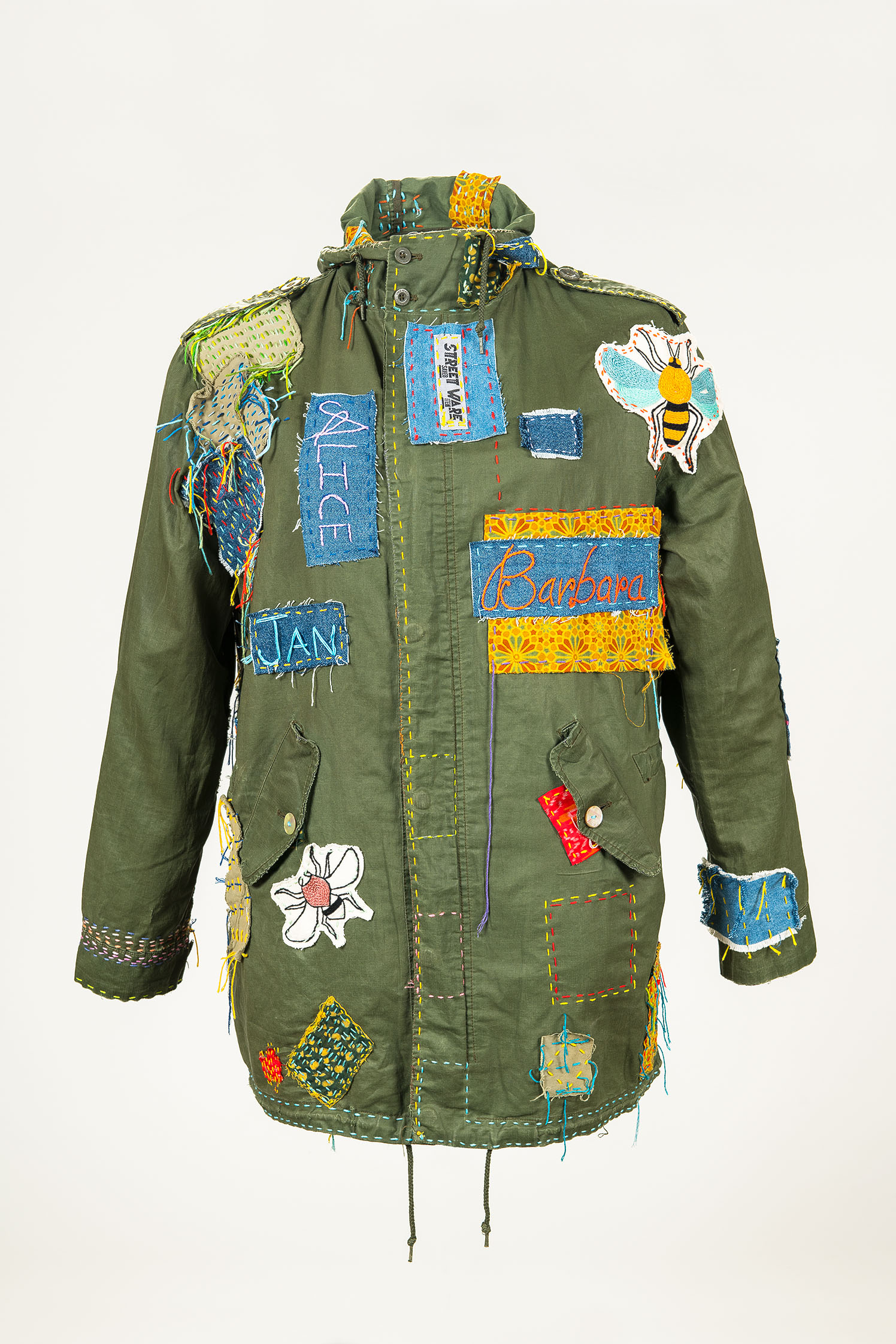
An olive-green outdoor jacket has been repaired with various eye-catching, colorful patches: Two iron-on patches featuring insect motifs stand out, as do large embroidered names on iron-on patches that identify members of the Berlin collective “STREETWARE saved item.”
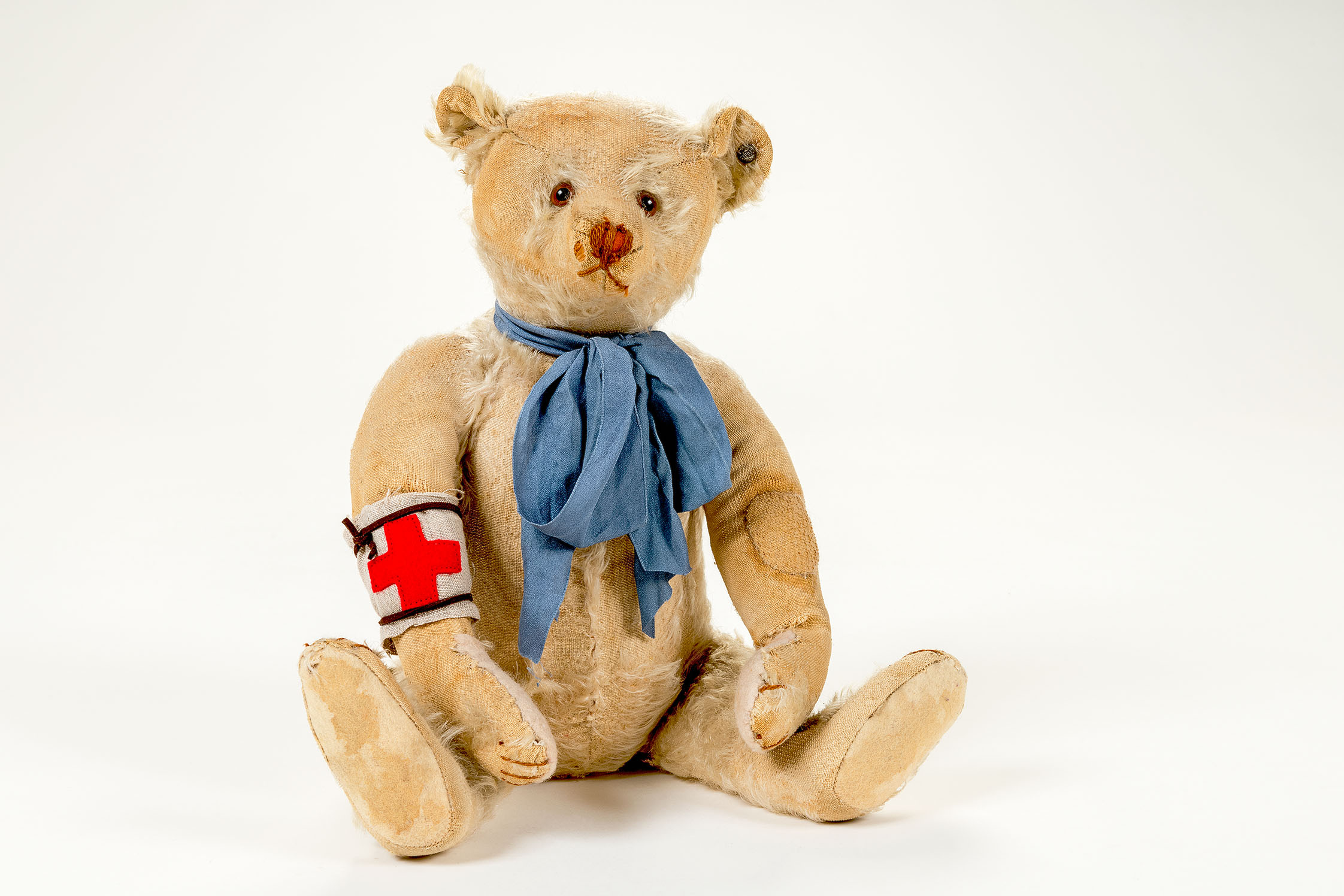
The picture shows a beige teddy bear with obvious signs of wear and tear. It is wearing a blue bow around its neck and a white armband with a red cross.
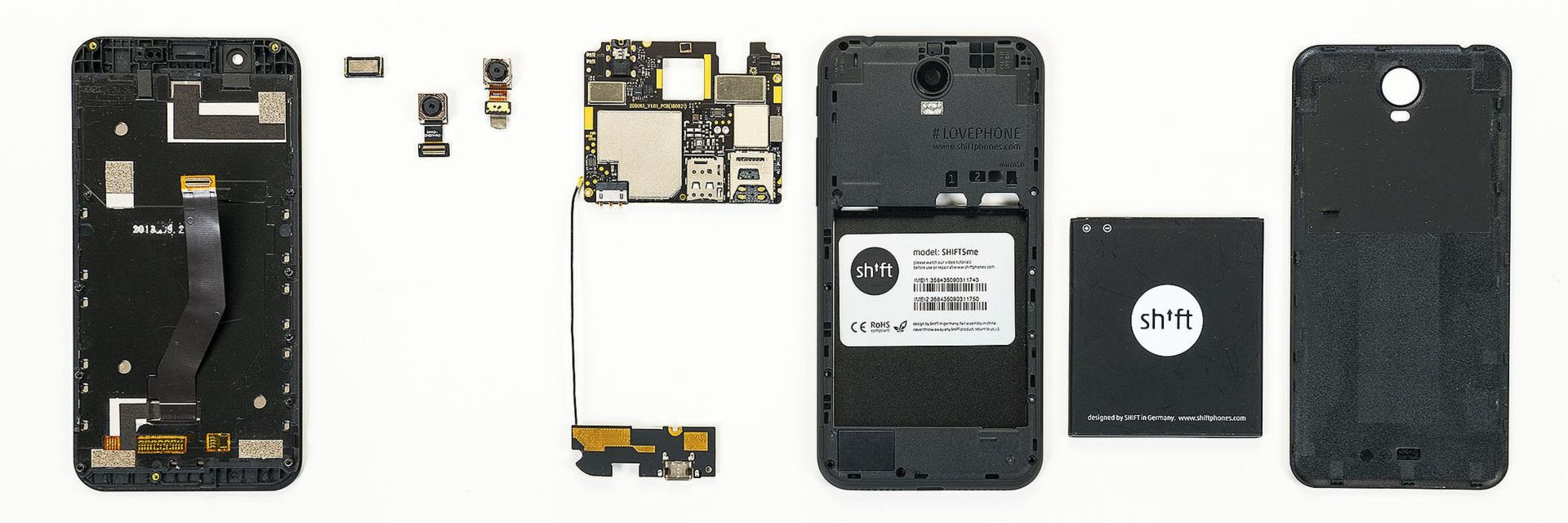
A smartphone has been taken apart into its individual components: the case, battery, display, camera, sensors, and various modular parts of the smartphone are lined up side by side.
Fashion designer Purvi Dhrangadhariya repairs discarded clothing as part of the Berlin collective "STREETWARE saved item." The collective takes a critical look at production methods, consumerism, and the throwaway madness of the "fast fashion" business model. The branded jacket shown here is a repaired item found on the street, 2021 SDTB/ Photo: C. Kirchner; On loan from: Purvi Dhrangadhariya, Berlin 1/3

(Hi)Stories of Repair

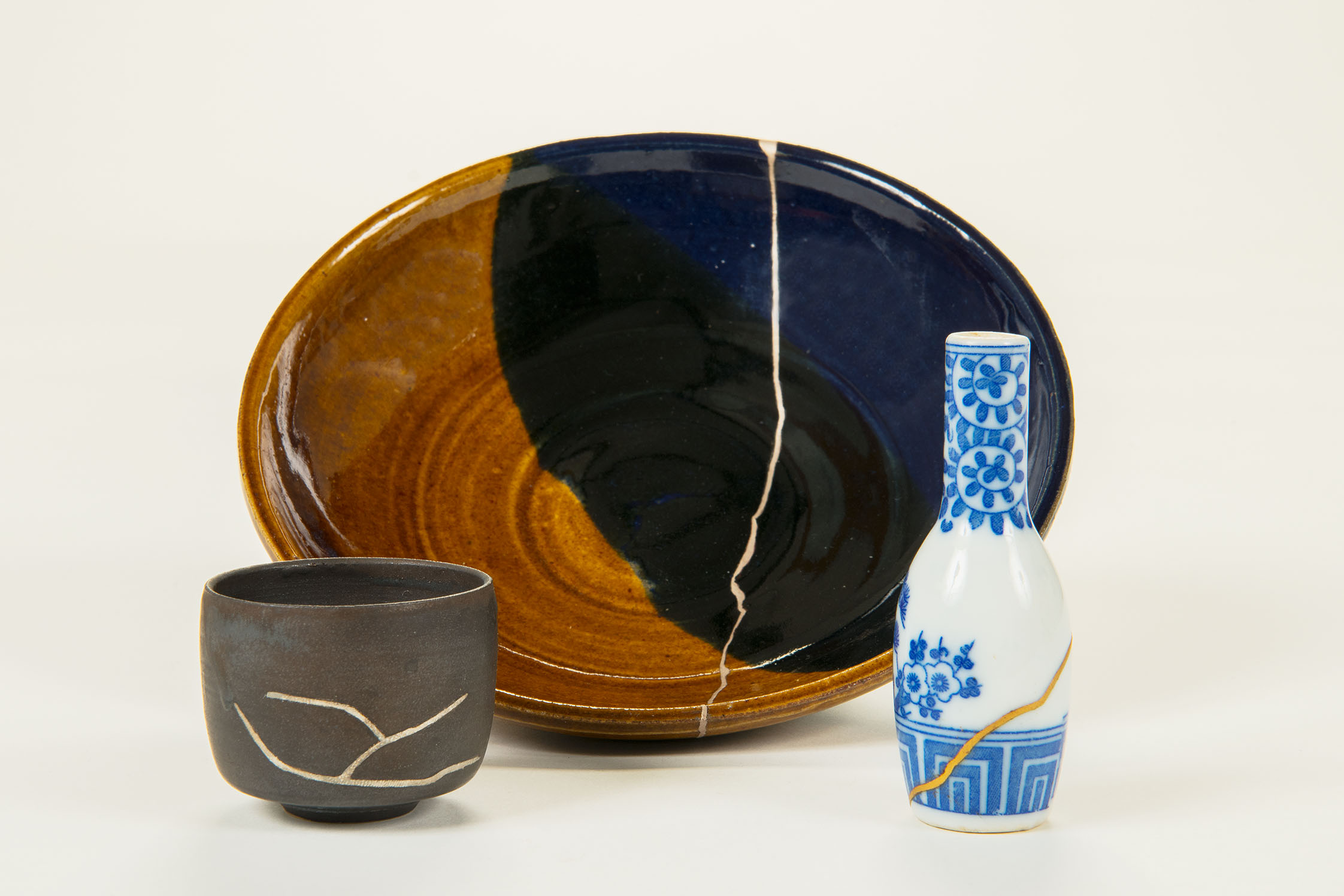
There are many exciting repair stories to be discovered in the exhibition. Extensively darned underwear and oft-patched children’s boots from the early 20th century tell of hardship and of repairs born of necessity. With the Japanese “golden repair,” it’s a different story: restored using the kintsugi technique, a tea bowl from the Edo period illustrates the great value traditionally attached to repaired objects in Japanese culture. Another example of repair comes from as far away as outer space. Here, the exciting story of the 1970 Apollo 13 mission is told, in which an improvised repair of the air filtration system saved the lives of the mission’s astronauts. Another aspect of repair comes to life when several of the exhibition’s protagonists talk about their personal experience with doing repairs. Visitors learn, for example, what you can do if your wheelchair breaks down and you’re on a pilgrimage, far away from any workshop.
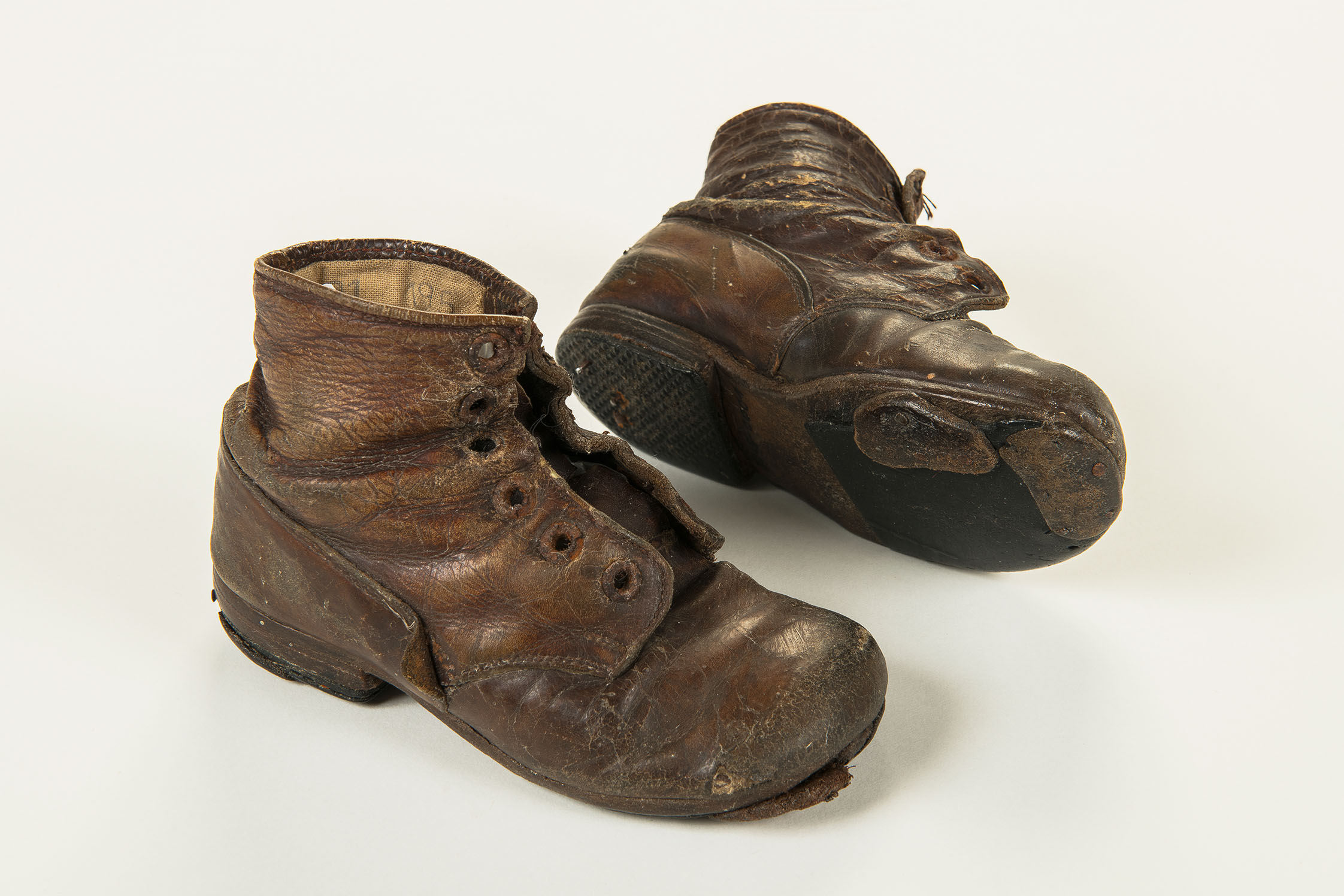
Even though they look worn out, these boots have been well cared for. Holes and brittle spots have been patched with small pieces of leather. The leather sole has been reinforced with pieces of hard rubber. This allowed a pair of siblings to wear these shoes for years.
The photo shows three ceramic pieces that were obviously broken but have been repaired with gold-colored putty. In the center is a brown-and-black plate with a golden crack running down the middle; to the right is a blue-and-white vase with a crack patched with gold; and to the left is a brown bowl with several cracks filled with gold-colored putty.
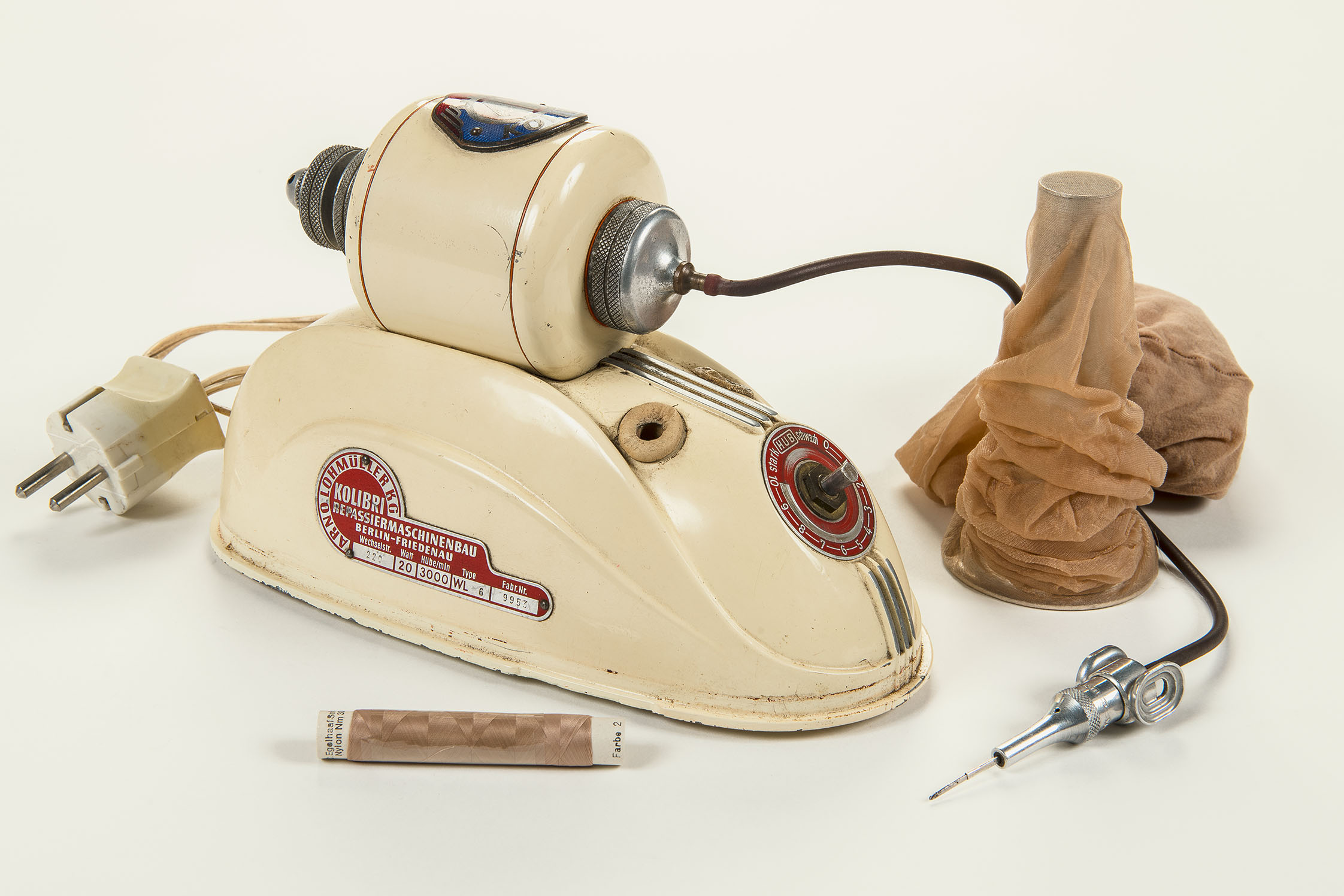
The image shows a cream-colored machine that vaguely resembles an iron. It has a wide base, a plug, a brown hose, and a silver-colored needle. Next to it is a stand holding a pair of beige-brown sheer pantyhose, and in front of it lies a spool of thread in the same color.
Even though they look worn—these boots have been well cared for. Holes and brittle spots have been patched with small pieces of leather. The leather sole has been reinforced with pieces of hard rubber. This allowed a pair of siblings to wear these shoes for years. SDTB/ Photo: C. Kirchner 1/3

Self-Repair in Living Beings

Another inspiring subject in the exhibition is the “self-repair” that can be observed in plants, animals, and other living beings. This is why the axolotl is the mascot of Repair! The Mexican amphibian is a true master of self-repair: it is able to grow new limbs within a short time if they become severed from his body. Two live specimens of this extraordinary animal can be visited and observed in the exhibition. They are being kept in a species-appropriate manner and will subsequently find a new home in the biology station of a Berlin high school. Examples ranging from microbes to Cooper’s ice plant illustrate that self-repair is natural in plants and other living organisms, and that they can be models for technology.
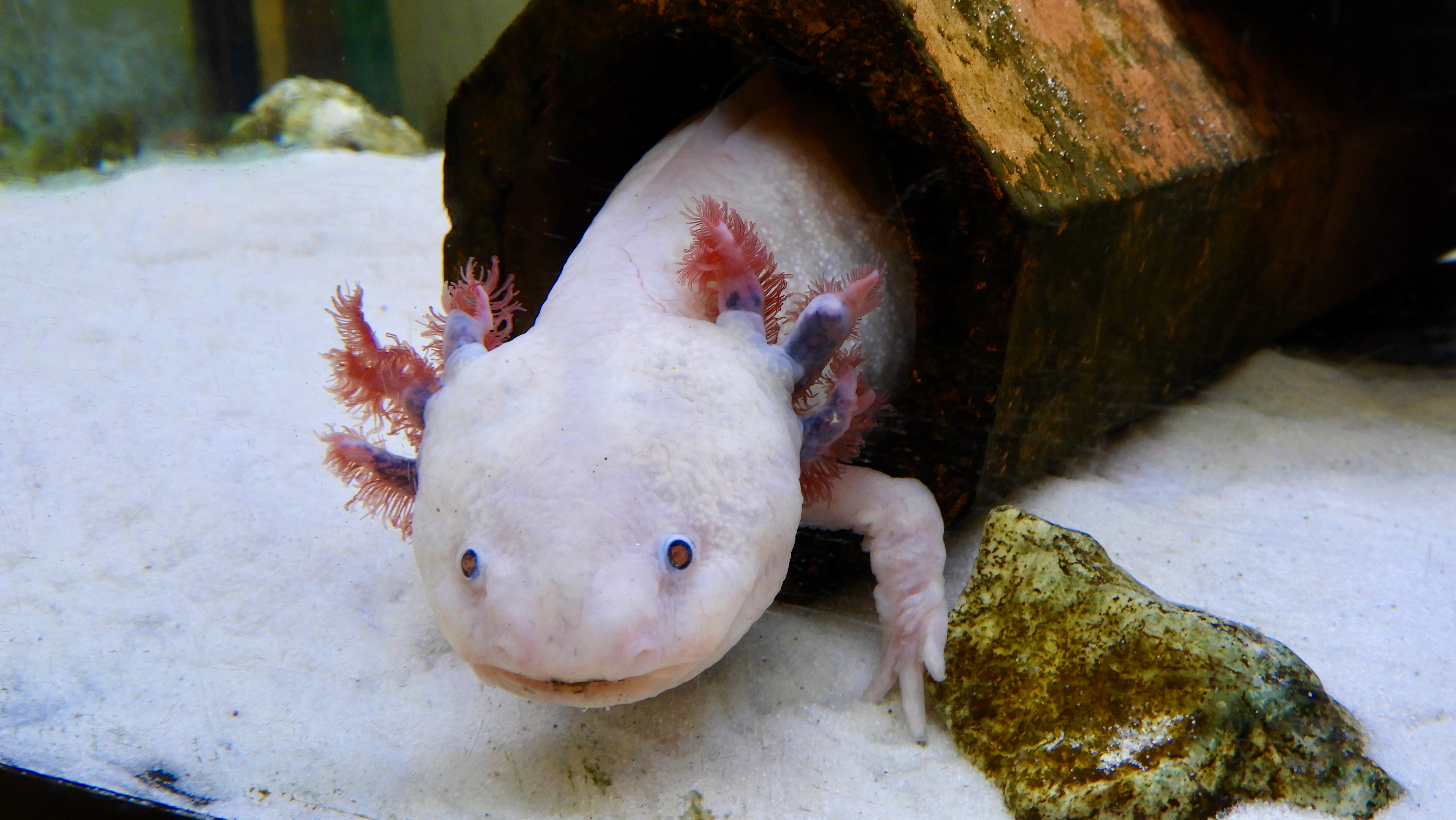
The picture shows a white amphibian with red-purple gills in an aquarium, with white sand beneath it.
The Mexican axolotl is a true master of self-repair. It can regrow limbs in a short time if they are severed. Two specimens of this extraordinary animal can be seen and observed at the exhibition. They are being cared for in a manner appropriate to their species and will subsequently find a new home at the biology station of a Berlin high school. The exhibition demonstrates that repair techniques found in nature can serve as models for technology. SDTB/ Photo: C. Kirchner 1/1

Just Do It!

Today, many people no longer feel confident doing everyday repairs. They lack the tools or the knowledge. The exhibition invites visitors to participate in hands-on activities and rediscover repair work. In the many hands-on stations, visitors can sew on buttons, artistically refurbish tables with colorful mosaic stones, or find out which tool fits which bolt or screw. The exhibition is especially well suited to families and inter-generational groups: here, Grandma and Grandpa can teach practical skills and show their grandchildren what they are capable of. A large hands-on workshop in the center of the exhibition opens the space for new repair experiences through workshops, demonstrations, and a Repair Café. Did you already know? There are about 50 Repair Cafés in all districts of Berlin.

Programming for All Visitors

On weekends, the exhibition offers a number of opportunities to get involved. There is a monthly Repair Café, where visitors are supported in their repair efforts. There are presentations about printing spare parts with a 3D printer, and there are family workshops in which old socks and buttons can be used to make things like axolotl hand puppets.
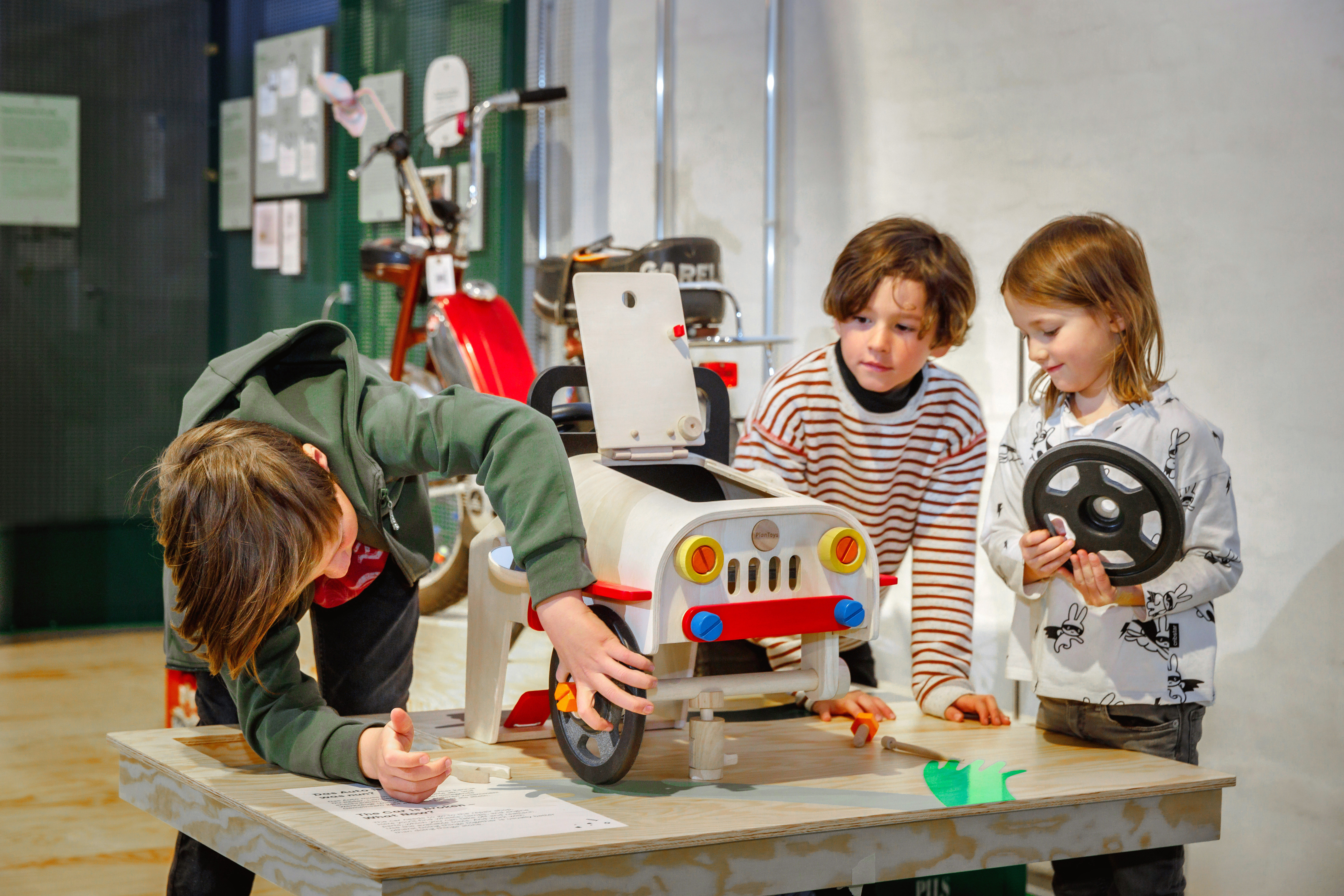
Three children are working together to assemble a colorful wooden car that is sitting on a table.
Car broken down? At this hands-on station, the goal is to work together to find the problem and get the vehicle back on the road. SDTB/ Photo: H. Hattendorf 1/1

The ABCs of Tools

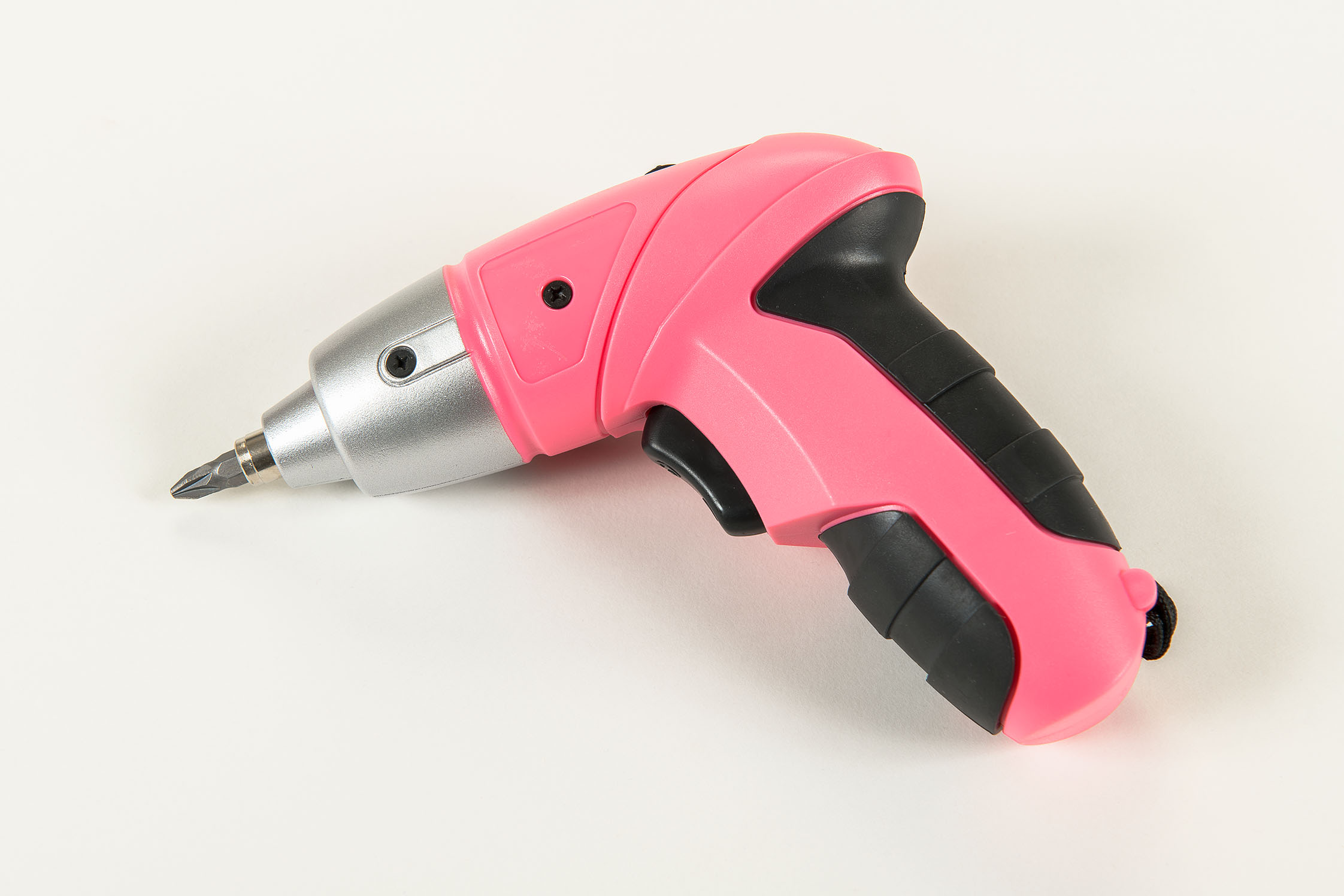
The picture shows a pink cordless screwdriver.
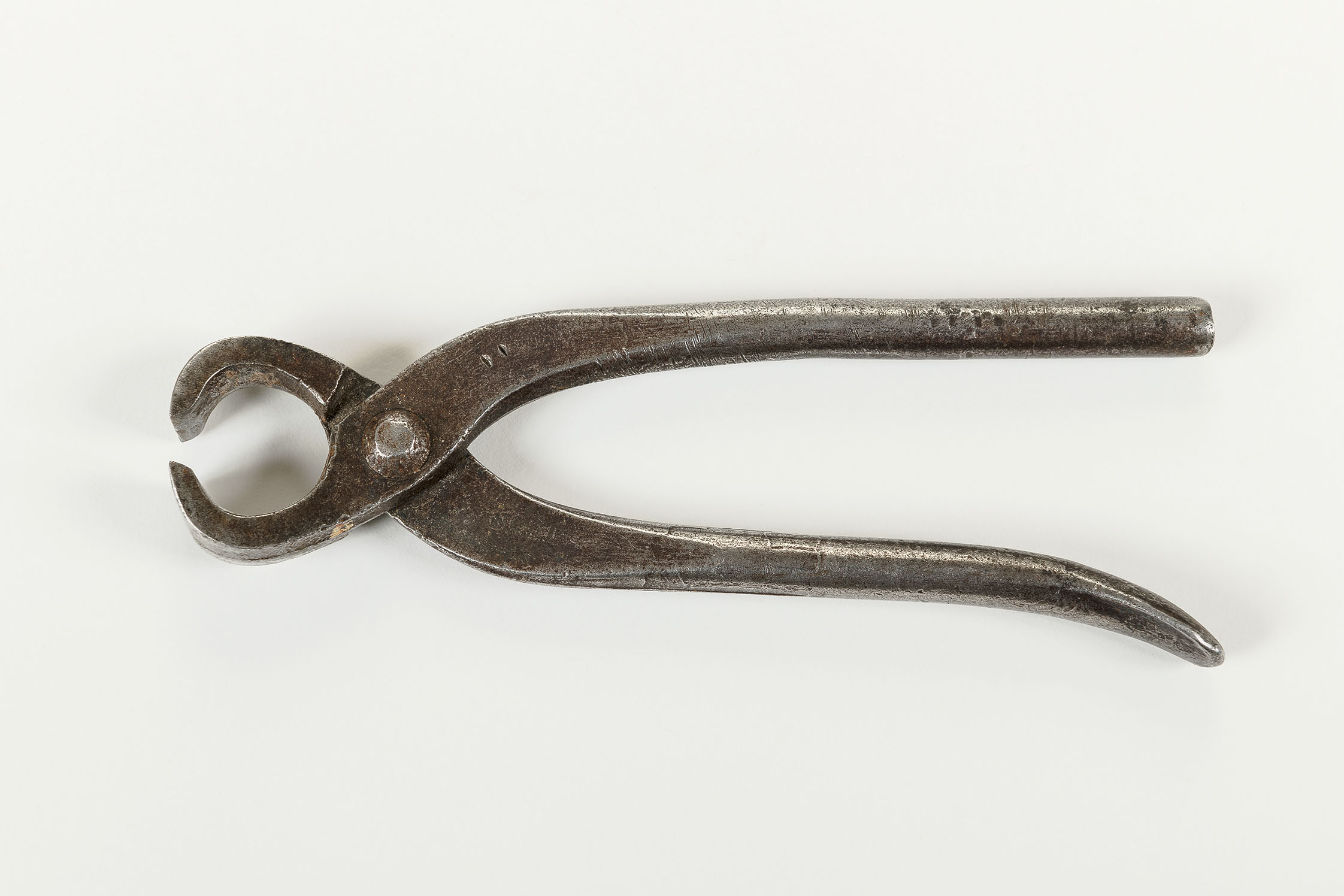
The picture shows an old pair of pliers.
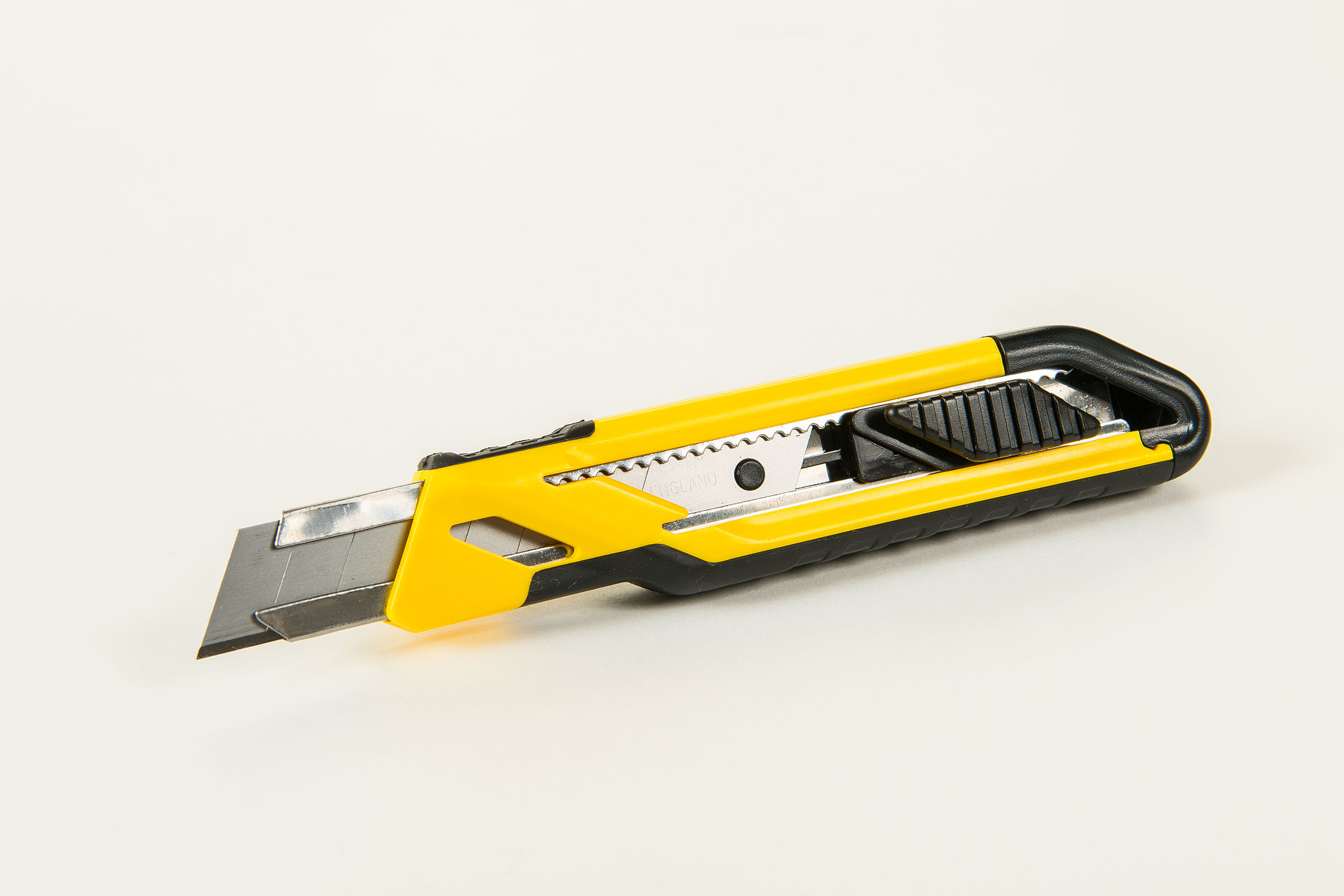
A yellow cutter is visible.
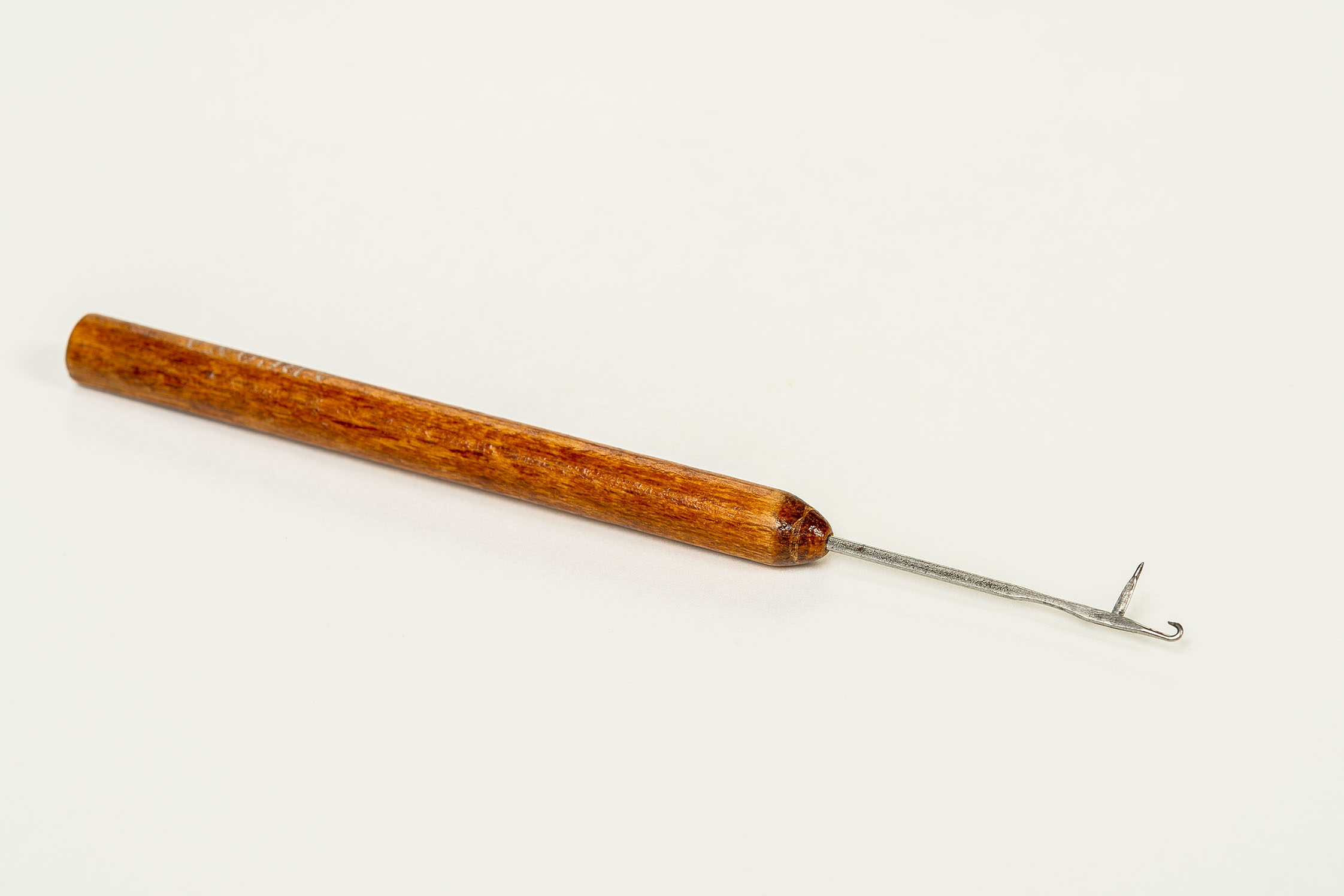
Pictured here is a darning needle: a special needle with a wooden handle used for mending runs in stockings.
The Little Tool ABC—the cordless screwdriver. The exhibition showcases tools from A to Z: from a simple cordless screwdriver to pliers and a utility knife, all the way to a darning needle for mending runs in stockings. SDTB/ Photo: C. Kirchner 1/4

 Patronage

(copy 9)

Logo of the Federal Ministry for the Environment, Nature Conservation, Nuclear Safety, and Consumer Protection. To the left of the text is the black federal eagle, and the national colors—black, red, and gold—appear in a vertical bar.

Media Partners

(copy 11)

The logo for the radio station radio eins. The word "radio" is in gray, "eins" is in orange, and next to it, "rbb" is in white superscript on a red background.
The Himbeer Publishing logo, featuring the word "Himbeer" in pink and the words "Berlin mit Kind" in black.